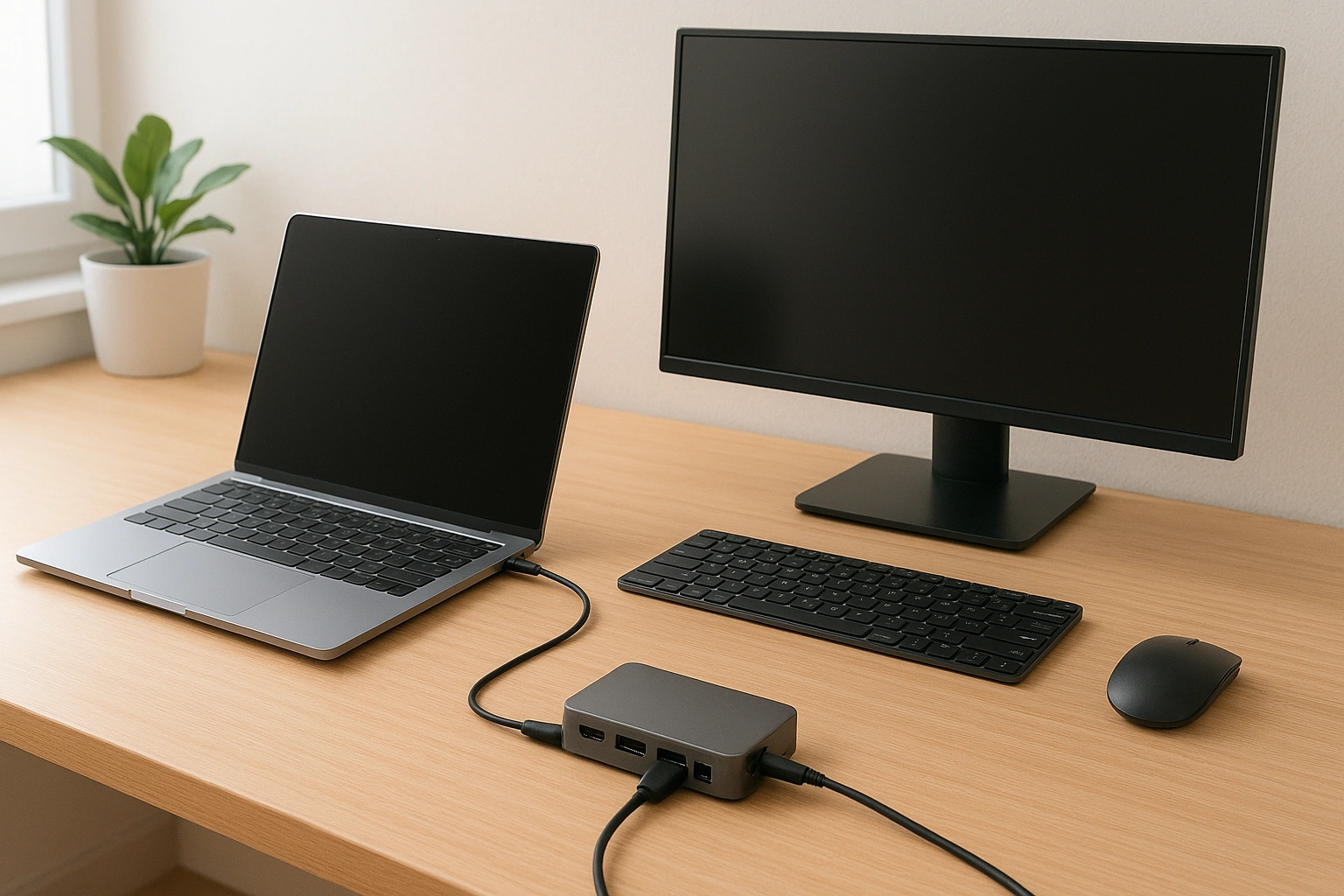
Are you tired of a tangled mess of cables, a scarcity of ports, and constantly plugging and unplugging devices from your laptop? In 2025, a cluttered desk is a productivity killer, and managing multiple peripherals can feel overwhelming. A well-chosen USB-C hub for workspace can solve this problem, transforming your setup into an organized, efficient area. Using a USB-C hub for workspace helps consolidate all your connections, making it easier to manage laptops, monitors, and other devices. With the right USB-C hub for workspace, you can streamline your workflow, reduce clutter, and enjoy a clean desk setup. This guide will show how a USB-C hub for workspace can enhance your efficiency and create a minimalist, functional home office.
What is a USB-C Hub for Workspace?
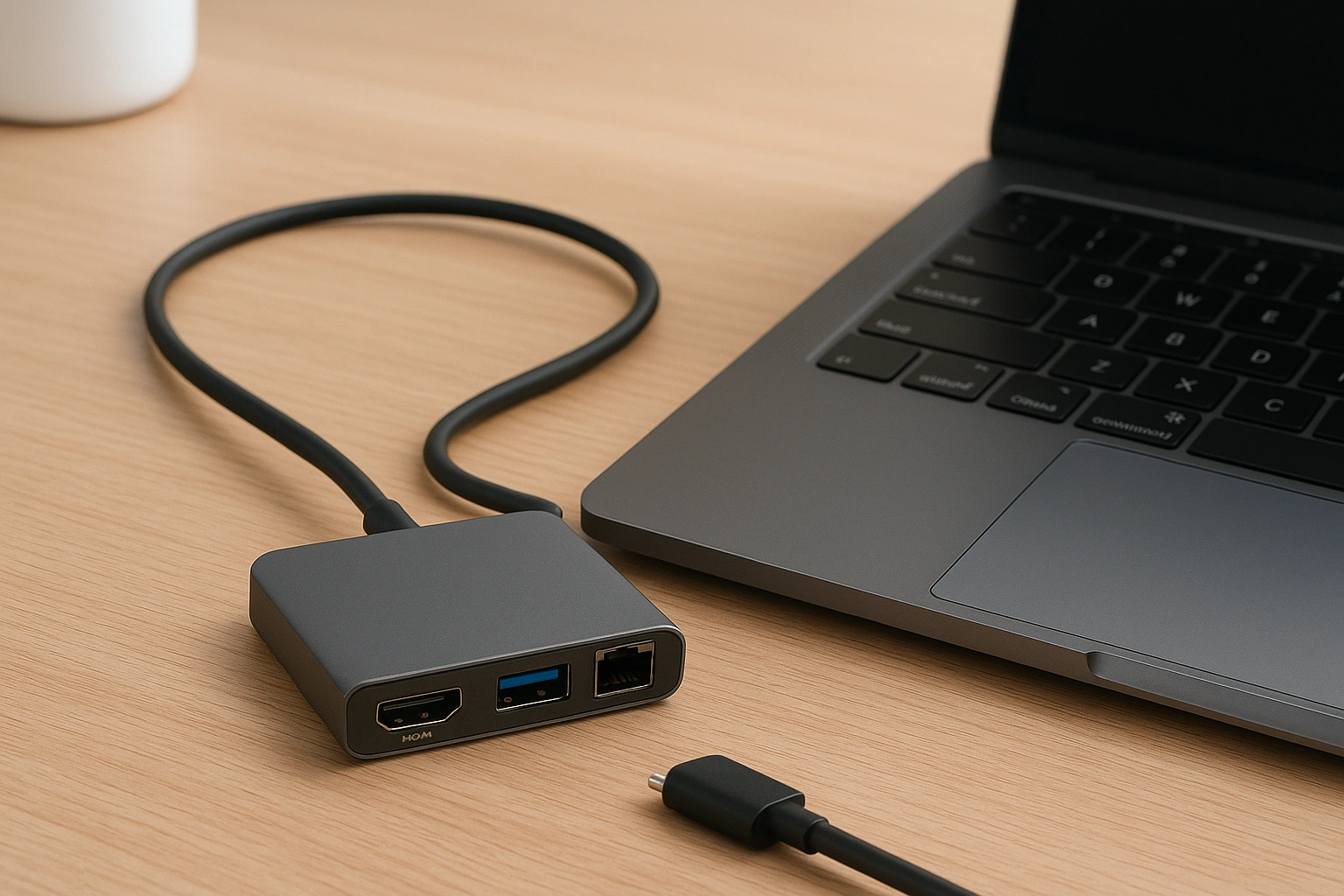
A USB-C hub for workspace is a versatile tool that greatly expands the connectivity of modern laptops and devices. Choosing the right USB-C hub for workspace allows you to convert a single USB-C port into multiple ports, including USB-A, HDMI, Ethernet, and SD card readers. A well-designed USB-C hub for workspace often includes power delivery to charge your laptop while you work. By using a USB-C hub for workspace, you can simplify connections, reduce cable clutter, and keep your workstation organized and efficient.
In 2025, as laptops become thinner and rely heavily on USB-C, a USB-C hub for workspace becomes essential for remote professionals who connect external monitors, keyboards, mice, and other workstation gadgets. A reliable USB-C hub for workspace serves as the cornerstone of a clean desk setup, reducing clutter and streamlining connectivity. Future trends show that USB-C hubs for workspace will feature even more compact designs, higher power delivery, and smoother integration with smart home systems. A 2024 study by Wired highlighted that professionals using a USB-C hub for workspace experienced a 30% reduction in desk clutter and a 15% boost in workflow efficiency. (Source: Wired – USB-C Hub Benefits)
Why a Clean Desk Setup Matters: Benefits for Productivity & Focus
Integrating a **USB-C hub for workspace** organization offers profound benefits that extend beyond just aesthetics, directly impacting your productivity, focus, and overall well-being.
Eliminate Cable Clutter & Visual Distraction
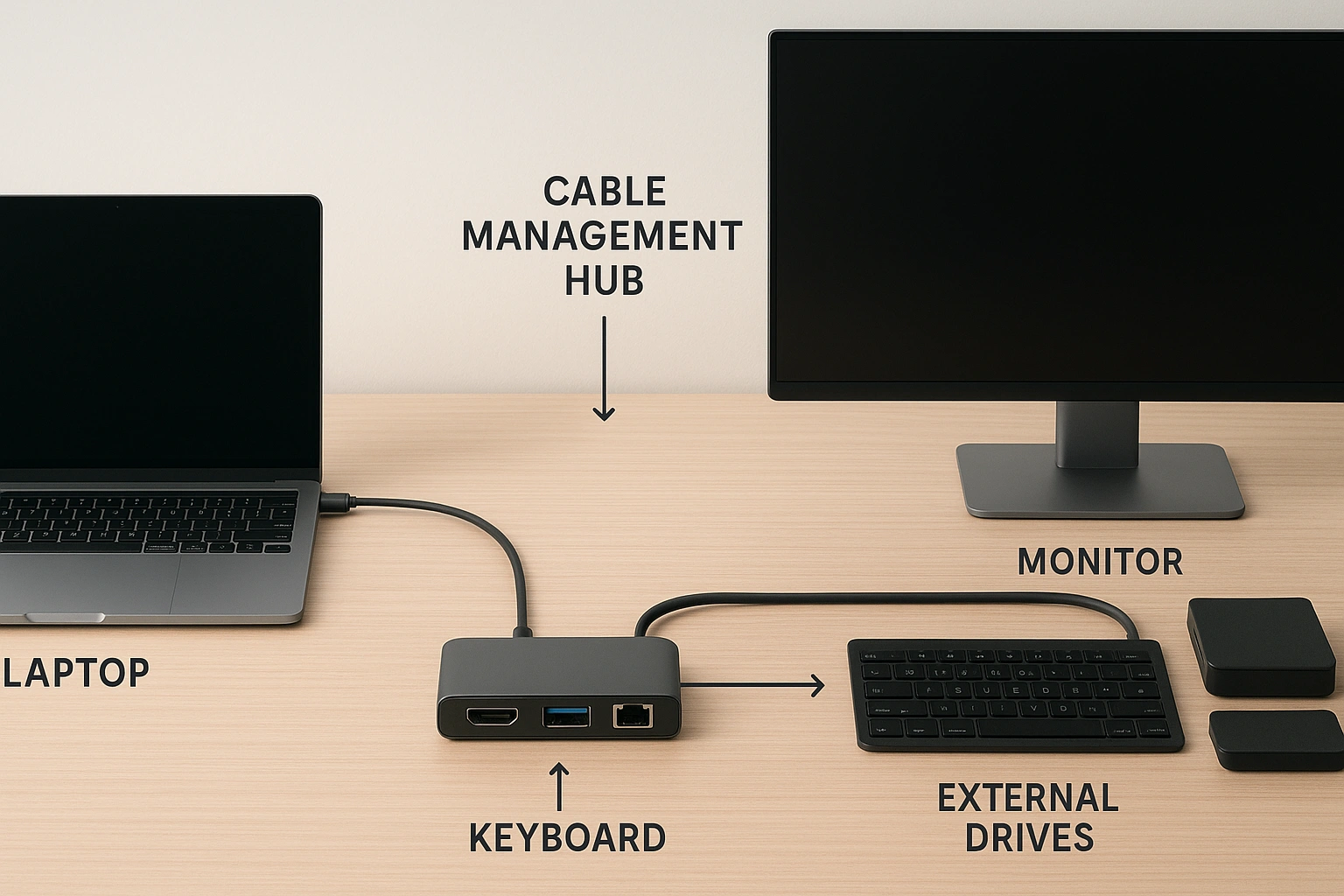
A tangled mess of cables and adapters is a constant source of visual distraction and mental fatigue. By consolidating all your peripheral connections into a single device, a cable management hub dramatically reduces the number of cables running to your laptop. This instantly creates a clean desk setup, minimizing visual noise and allowing your brain to focus on your tasks rather than the chaos around you. A tidy workspace promotes a tidy mind.
Streamline Connectivity & Workflow
Constantly plugging and unplugging multiple devices is inefficient and frustrating. A USB-C hub transforms your laptop into a powerful workstation with a single connection. Need to connect to an external monitor, keyboard, mouse, and charge your laptop? One USB-C cable does it all. This seamless connectivity streamlines your workflow, saving precious minutes each day and reducing friction, allowing you to transition between tasks or environments effortlessly.
Enhance Portability & Adaptability
For remote workers who frequently move between different workspaces (e.g., home office, co-working space, coffee shop), a USB-C hub makes your setup incredibly portable. Disconnecting your entire workstation becomes a one-cable affair. When you arrive at a new location, reconnecting is just as simple. This adaptability ensures that your remote workstation gadgets are always ready to go, no matter where your work takes you. For more tips on optimizing your remote setup, check out our guide on remote work productivity hacks.
How It Works: Core Features of a USB-C Hub
The best **USB-C hub for workspace** organization combines a variety of ports and smart functionalities to create a versatile and efficient connectivity solution. Here’s a breakdown of their core features.
- Power Delivery (PD):
- Laptop Charging: Allows you to power your laptop through the hub, using a single USB-C cable for both data and power.
- Wattage: Check the PD wattage (e.g., 60W, 100W) to ensure it matches or exceeds your laptop’s charging requirements.
- Video Output:
- HDMI/DisplayPort: Connect external monitors, supporting various resolutions (e.g., 4K@30Hz, 4K@60Hz).
- Multi-Monitor Support: Some hubs can drive two or more external displays simultaneously.
- Data Ports:
- USB-A Ports: Connect older peripherals like keyboards, mice, or external hard drives.
- USB-C Data Ports: For connecting newer USB-C accessories that don’t require video output.
- Data Transfer Speeds: Look for USB 3.0 (5Gbps) or USB 3.1/3.2 (10Gbps) for fast file transfers.
- Networking & Storage:
- Ethernet Port: Provides a stable, wired internet connection, often faster and more reliable than Wi-Fi.
- SD/MicroSD Card Readers: Convenient for photographers, videographers, or anyone needing to transfer files from memory cards.
- Design & Form Factor:
- Compact & Portable: Small enough to carry in a laptop bag for on-the-go productivity.
- Desktop Hub/Dock: Larger, more feature-rich options designed to stay on your desk, often with more ports and higher power. This is your ideal cable management hub.
Here’s a simplified process flow illustrating how a cable management hub integrates into your clean desk setup:
Chart: USB-C Hub Desk Setup Workflow
| Step | Action | Goal | Benefit for Desk Cleanliness |
|---|---|---|---|
| 1 | Identify Connectivity Needs List all peripherals (monitors, keyboard, mouse, etc.). |
Determine required hub ports & power. | Choose the right USB-C hub for workspace. |
| 2 | Connect Peripherals to Hub Plug all devices into the USB-C hub. |
Centralize all connections. | Reduces individual cables running to laptop. |
| 3 | Connect Hub to Laptop Use a single USB-C cable from hub to laptop. |
One-cable connection for entire workstation. | Dramatic reduction in visible cables on desk. |
| 4 | Organize Hub & Cables Position hub discreetly, use cable ties. |
Hide hub and manage remaining cables. | Achieve a truly clean desk setup. |
| 5 | Enjoy Decluttered Workspace Work efficiently with streamlined connectivity. |
Boost focus & productivity. | Enhanced aesthetics & mental clarity. |
| Total | Organized & Efficient Remote Workstation. |
Real-Life Desk Transformation: A Case Study with a Cable Management Hub
Let me share a common scenario that shows how a USB-C hub for workspace can completely transform a cluttered desk. By integrating a USB-C hub for workspace, a remote professional can consolidate cables, organize devices, and create a truly functional environment. A well-chosen USB-C hub for workspace simplifies connectivity for monitors, keyboards, and other gadgets, while a USB-C hub for workspace ensures the workspace remains clean, efficient, and easy to manage.
The Challenge:
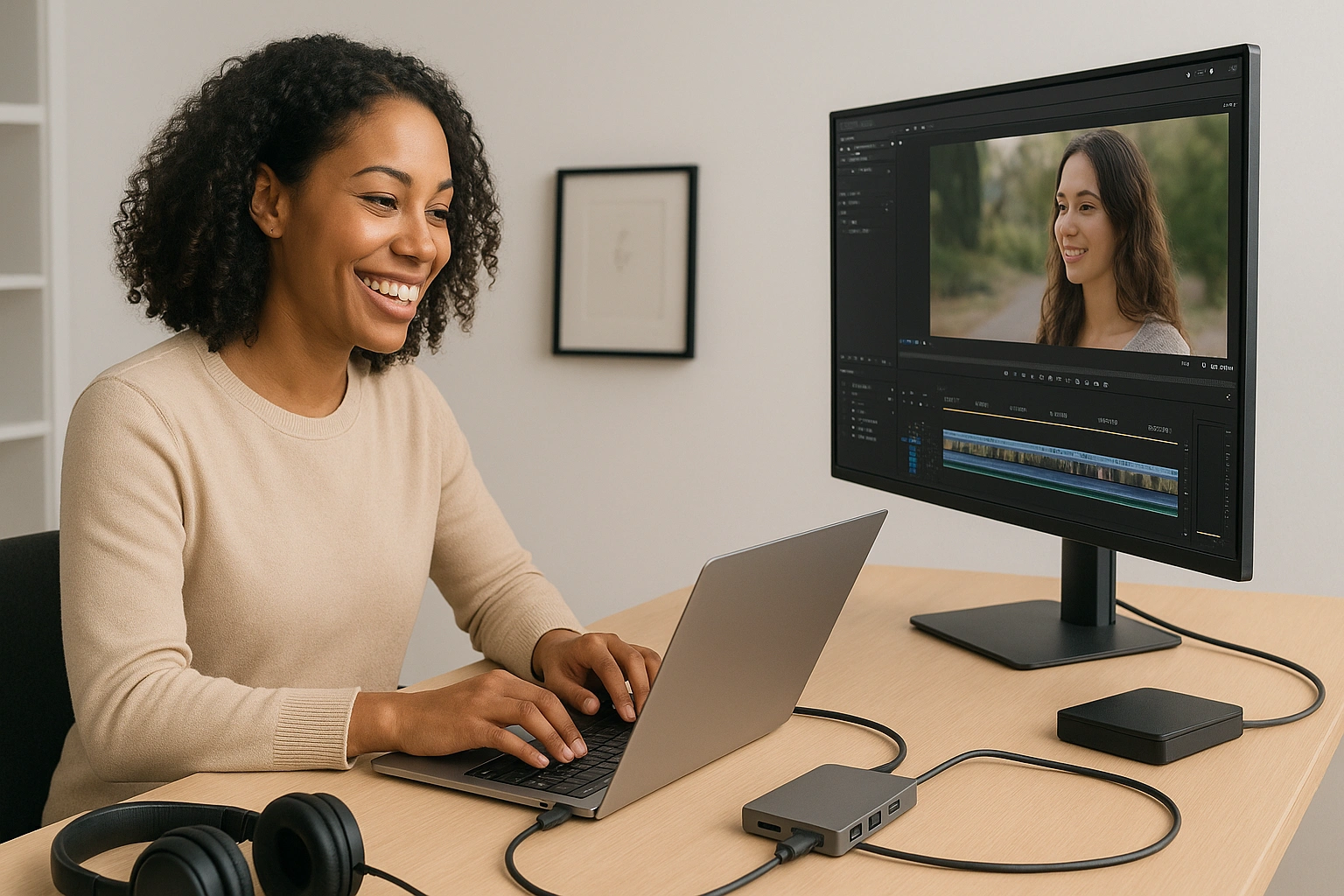
Sarah, a remote video editor, worked with a powerful laptop, two external monitors, an external hard drive, a keyboard, and a mouse. Her desk was a chaotic mess of cables, adapters, and power bricks. Every time she needed to take her laptop on the go, it was a frustrating ordeal of unplugging and replugging a dozen different wires. Her workspace felt cluttered and inefficient.
The Transformation with a USB-C Hub for Workspace:
- Invested in a High-Power USB-C Docking Station ($200): Sarah chose a robust USB-C docking station (essentially an advanced USB-C hub) that offered dual HDMI outputs, multiple USB-A ports, an Ethernet port, and 100W Power Delivery. This was her ideal USB-C hub for workspace organization.
- Centralized All Connections: She plugged both her external monitors, her external hard drive, keyboard, and mouse directly into the docking station. Her laptop’s power adapter also connected to the dock.
- Single Cable to Laptop: Now, only one USB-C cable ran from the docking station to her laptop. When she needed to leave, she simply unplugged that single cable.
- Cable Management: She used cable ties and an under-desk cable tray to neatly tuck away the docking station and all its connected wires, creating a truly clean desk setup.
Outcome: Sarah’s desk was completely transformed. The visual clutter vanished, replaced by a minimalist and highly functional workspace. Her setup and breakdown time was reduced from several minutes to mere seconds. She felt more organized, focused, and less stressed, directly impacting her editing efficiency. This case highlights how a powerful **cable management hub** can revolutionize a remote workstation.
Pros and Cons of Using a USB-C Hub for Workspace:
| Pros | Cons |
|---|---|
| Dramatically Reduces Cable Clutter: One cable to your laptop. | Upfront Cost: Quality hubs can be a significant investment. |
| Expands Connectivity: Adds multiple essential ports. | Compatibility Issues: May not work perfectly with all laptops/OS. |
| Streamlines Workflow: Quick setup/breakdown, saves time. | Heat Generation: Some hubs can get warm under heavy load. |
| Enhances Portability: Easy to move laptop on the go. | Power Delivery Limits: Ensure it matches your laptop’s needs. |
| Boosts Productivity: Less distraction, more focus. | Video Output Limitations: Check supported resolutions and refresh rates. |
Comparing Top USB-C Power Hubs (2025)
The market for **USB-C hub for workspace** solutions is diverse, with options ranging from portable hubs to full docking stations. Here’s a comparison of leading cable management hub options for your remote workstation gadgets in 2025.
| Product Type | Example Product | Key Features | Pros | Cons | Best For |
|---|---|---|---|---|---|
| Portable USB-C Hubs | Anker 555 USB-C Hub (8-in-1) (or similar) | HDMI 4K@60Hz, PD 100W, USB-A, Ethernet, SD/TF card slots. | Compact, excellent portability, good range of essential ports. | Can get warm, not suitable for dual external monitors. | Travelers, minimalists, users needing essential port expansion. |
| HyperDrive 6-in-1 USB-C Hub (or similar) | HDMI 4K@60Hz, PD 100W, USB-A, SD/MicroSD, compact design. | Sleek design, good for MacBooks, reliable performance. | Fewer ports than some, no Ethernet. | MacBook users, design-conscious individuals, light connectivity needs. | |
| Desktop USB-C Docks | CalDigit TS4 Thunderbolt 4 Dock (or similar) | 18 ports, 98W PD, dual 6K/single 8K display, 2.5GbE Ethernet. | Ultimate connectivity, high power delivery, future-proof. | Premium price, requires Thunderbolt 4 port for full features. | Power users, creative professionals, dual/triple monitor setups. |
| Dell WD19S USB-C Dock (or similar) | Multiple USB ports, dual DisplayPort/HDMI, Ethernet, 130W PD. | Enterprise-grade reliability, robust power, good for office setups. | Less portable, can be expensive, primarily for Dell laptops. | Corporate users, permanent desk setups, Dell laptop owners. | |
| Monitor with Built-in USB-C Hub | Dell U2723QE (or similar) | 4K monitor, 90W PD, Ethernet, multiple USB-A/C ports, KVM switch. | Ultimate clean setup, single cable solution, high-quality display. | Higher initial cost (monitor + hub), less portable. | Minimalists, users wanting a truly integrated, clean workspace. |
Common Mistakes to Avoid When Using Remote Workstation Gadgets
While **USB-C hub for workspace** organization offers immense benefits, certain missteps can diminish their effectiveness. Avoid these common pitfalls to truly leverage your remote workstation gadgets.
- Ignoring Power Delivery (PD) Needs: Mistake: Buying a hub with insufficient PD wattage for your laptop, leading to slow charging or battery drain under load. Correction: Always check your laptop’s power adapter wattage and choose a USB-C hub that provides equal or greater PD. This ensures your laptop stays charged during heavy use.
- Underestimating Video Output Requirements: Mistake: Purchasing a hub that doesn’t support your desired monitor resolution, refresh rate, or number of displays. Correction: Verify the hub’s video output specifications (e.g., 4K@60Hz, dual HDMI). Ensure it matches your monitors and graphics card capabilities for a seamless display experience.
- Not Checking Laptop Compatibility: Mistake: Assuming all USB-C ports are equal. Some basic USB-C ports don’t support video output or power delivery. Correction: Confirm your laptop’s USB-C port supports “DisplayPort Alt Mode” and Power Delivery. Check your laptop’s specifications or manual.
- Over-Cluttering the Hub Itself: Mistake: While the hub cleans up cables to your laptop, having many short, messy cables plugged into the hub itself. Correction: Treat the hub as another point for cable management. Use short cables, cable ties, or mount the hub discreetly under your desk to maintain a truly clean desk setup.
- Prioritizing Cheapest Option Over Reliability: Mistake: Opting for a very cheap, unbranded USB-C hub that may have connectivity issues, overheat, or fail quickly. Correction: Invest in reputable brands known for quality and reliability. Read reviews for consistent performance, especially for critical connections like video and Ethernet.
- Forgetting About Firmware Updates: Mistake: Not keeping your USB-C hub’s firmware updated, which can lead to compatibility issues or performance bugs. Correction: Periodically check the manufacturer’s website for firmware updates. These can improve stability and add support for new devices.
- Ignoring Heat Management: Mistake: Placing the hub in an enclosed space where it can overheat, affecting performance and longevity. Correction: Ensure your cable management hub has adequate ventilation. Avoid stacking items on top of it or placing it in direct sunlight to prevent overheating.
Expert Tips & Best Practices for a Clean Desk Setup with USB-C Hubs
To truly master your **USB-C hub for workspace** organization and achieve an immaculate clean desk setup, consider these expert strategies.
- Mount Your Hub Under the Desk: “For the ultimate clean aesthetic, use an under-desk mount or strong double-sided tape to secure your USB-C hub out of sight,” advises desk setup minimalist, John Smith. This keeps your cable management hub completely hidden.
- Use Short, Custom-Length Cables: Replace long, coiled cables with shorter ones that are just long enough to reach from your peripherals to the hub. This drastically reduces visual clutter.
- Invest in a Monitor Arm with USB Hub: Some monitor arms have integrated USB-C hubs. This creates an incredibly clean setup where your monitor and peripherals connect through a single cable from the monitor to your laptop.
- Utilize Cable Sleeves & Ties: Bundle any remaining cables (e.g., from your monitors to the hub) together using cable sleeves or Velcro ties. This creates a single, neat bundle rather than a messy tangle.
- Plan Your Port Layout: Before connecting everything, think about which ports you use most frequently. Position the hub so those ports are easily accessible, even if the hub itself is hidden.
- Consider a Wireless Mouse & Keyboard: While a USB-C hub reduces cables, going wireless for your keyboard and mouse eliminates two more cables entirely, contributing further to a clean desk setup.
- Label Your Cables: For a complex setup with many remote workstation gadgets, use small labels on each cable. This makes troubleshooting or reconfiguring your setup much easier.
- Power Strip with USB-C Ports: Consider a power strip that includes built-in USB-C Power Delivery ports. This can further reduce the number of individual power bricks and cables.
- Regularly Dust & Clean: A clean desk is part of the aesthetic. Regularly dust your hub, cables, and peripherals to maintain a pristine look.
- Test All Connections: After setting up, test every port and connection to ensure everything is working as expected. This prevents frustration during critical work moments.
Frequently Asked Questions (FAQ) About USB-C Hubs for Workspace
Here are some common questions about using USB-C power hubs to clean up your desk setup.
Q: What is a USB-C hub for workspace organization?
A: A USB-C hub for workspace organization is a compact device that expands the connectivity of your USB-C laptop or device, offering multiple ports (USB-A, HDMI, Ethernet, SD card, etc.) and often power delivery. It centralizes connections, reduces cable clutter, and helps achieve a clean desk setup.
Q: How does a USB-C hub help create a clean desk setup?
A: By consolidating multiple peripheral connections (monitor, keyboard, mouse, external drives, power) into a single USB-C cable to your laptop, a USB-C hub dramatically reduces cable clutter. This frees up ports on your laptop and makes your workspace look tidy and organized.
Q: What features are essential in a cable management hub?
A: Essential features include sufficient power delivery (PD) for charging, a variety of ports (USB-A, HDMI, Ethernet), high data transfer speeds, and a compact design. Look for hubs with integrated cable management or a design that blends seamlessly into your desk setup.
Q: Can a USB-C hub power multiple devices and monitors?
A: Yes, many USB-C hubs (especially docking stations) are designed to deliver power to your laptop while simultaneously connecting to multiple monitors and peripherals. Always check the hub’s power delivery (PD) and video output specifications to ensure it meets your needs.
Q: Is a USB-C hub the same as a docking station?
A: While often used interchangeably, docking stations are typically more robust, offering more ports, higher power delivery, and advanced features for a more permanent remote workstation setup. USB-C hubs are generally more portable and simpler, ideal for expanding basic connectivity.
Q: How do I choose the best USB-C hub for my remote workstation gadgets?
A: Consider the number and type of ports you need, your laptop’s power requirements, desired video output (single/dual monitor, resolution), and portability. Read reviews for reliability and compatibility with your specific devices to ensure it supports all your remote workstation gadgets.
Conclusion
In 2025, a USB-C hub for workspace is an indispensable tool for any remote professional looking to streamline their setup. Using a USB-C hub for workspace helps consolidate multiple cables into a single connection, making your desk cleaner and more organized. The right USB-C hub for workspace not only eliminates visual clutter but also boosts productivity and enhances the overall aesthetic of your home office. Choosing a quality USB-C hub for workspace ensures your remote workstation gadgets are efficient, easy to manage, and contribute to a minimalist workspace.
Don’t let a tangle of wires disrupt your focus. Investing in a USB-C hub for workspace today can transform your home office, turning your workstation into a model of efficiency, connectivity, and clean design.
Ready to take your budget setup to the next level? Explore more advanced tips on maximizing your home office space by visiting
AI Generatif
.
Cheap remote work setup is within reach – go build it!
. For cutting-edge insights into connectivity and workstation technology, consider reading reports from authoritative sources like Wired Magazine’s USB-C section. Declutter your desk, declutter your mind!