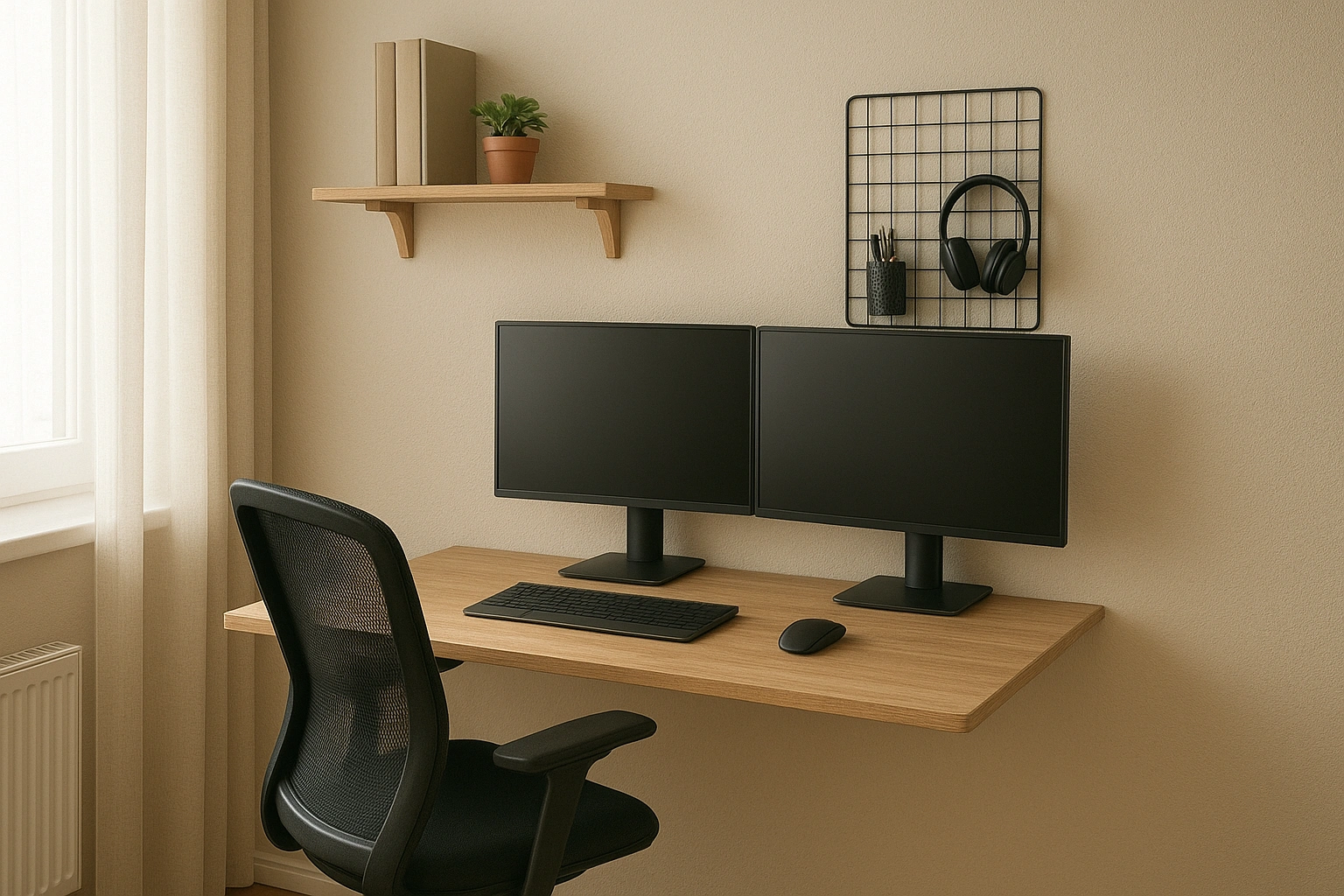
Did you know that as of 2025, nearly 30% of all employees work in a hybrid or fully remote model? The work-from-home revolution is here to stay, but our living spaces haven’t always caught up. If you’re trying to carve out a productive workspace from a small apartment, a crowded room, or an unused corner, you know the struggle is real. This guide is your blueprint for transformation, offering clever tiny home office ideas that adapt to any living situation.
We’re diving deep into actionable solutions that don’t just save space—they maximize your efficiency and creativity. By exploring practical small office setups and tiny home office ideas, you’ll discover new ways to design a workspace that inspires focus and comfort.
With the right approach, even compact corners can be turned into powerful work zones. These smart tiny home office ideas prove that with creativity, you don’t need a big room to achieve big goals or maintain productivity every day.
What Are Tiny Home Offices?
A tiny home office is a compact, dedicated workspace designed to fit seamlessly into a small area. It’s not about shrinking a traditional office; it’s about rethinking it. This could be a nook under the stairs, a converted closet, or a smart corner in your living room. In 2025, with rising housing costs and the permanence of remote work, these micro-workspaces have become essential. According to a recent Pew Research Center survey, a majority of workers who can work from home do so, making the need for an efficient small workspace setup more critical than ever. It’s a trend driven by necessity and ingenuity, focusing on minimalism and multi-functionality.
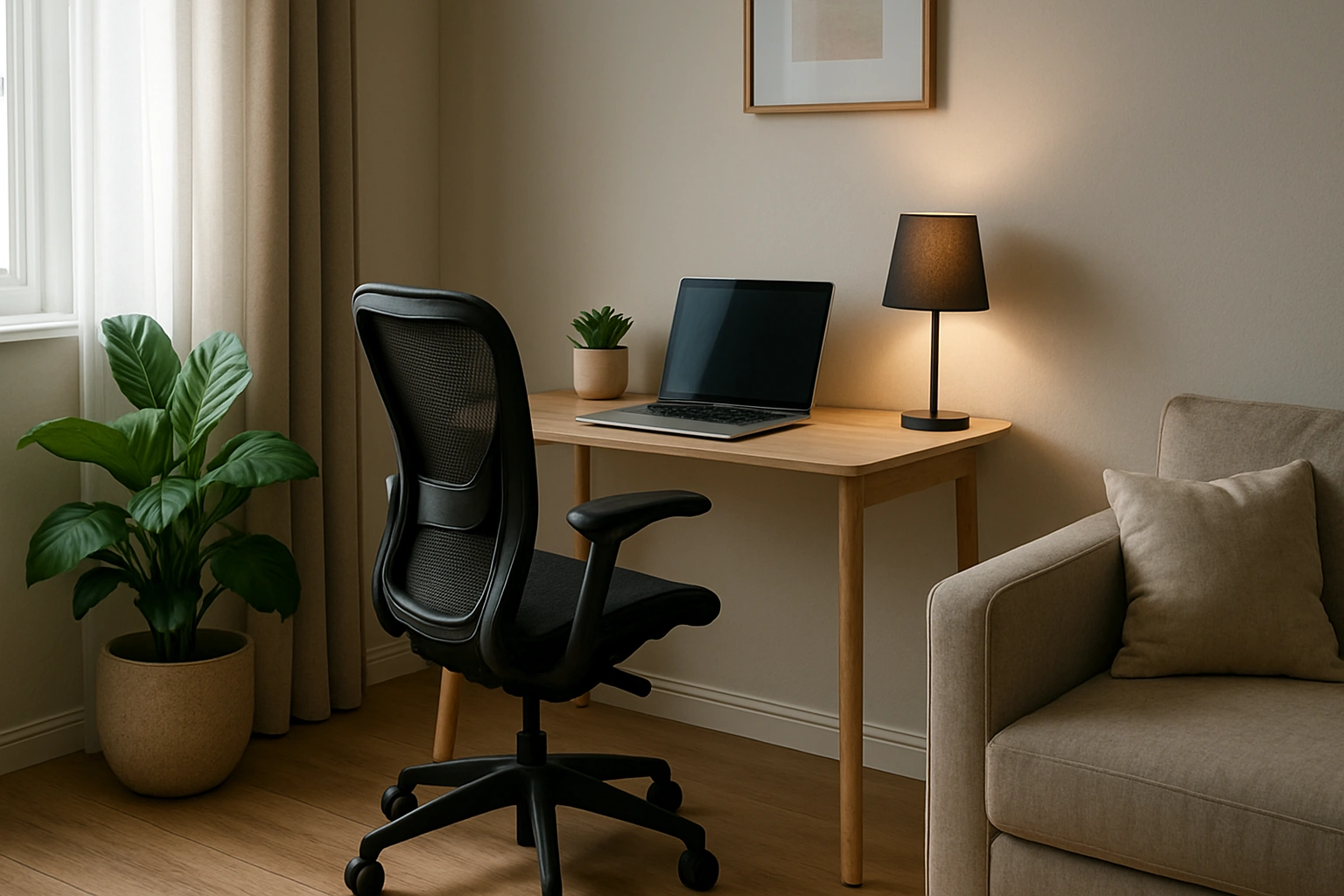
Why a Dedicated Small Workspace Matters
Tempted to just work from the sofa? While comfortable, it can be a productivity killer, which is why tiny home office ideas are often the better solution.
Creating a dedicated spot, even if it’s small, reflects how tiny home office ideas help transform unused corners into productive zones.
These setups prove that tiny home office ideas aren’t just about saving space but about building focus and structure.
In practice, following simple tiny home office ideas offers both psychological and practical benefits for anyone working remotely.
Boosts Productivity and Focus
When you sit at your designated workspace, your brain gets a signal: it’s time to work. Applying tiny home office ideas makes this separation stronger, helping you create a zone that feels truly professional.
This separation also helps minimize distractions from household chores or entertainment, a benefit often highlighted in practical tiny home office ideas that focus on balance and focus.
By following smart tiny home office ideas, you allow yourself to enter a state of deep focus more easily without being tempted by the comfort of your living space.
A well-organized space, built around thoughtful tiny home office ideas, means less time searching for items and more time completing tasks.
Improves Work-Life Balance
Creating a physical boundary between “work” and “life” is crucial for mental health, and this is where tiny home office ideas play a key role in shaping balance.
At the end of the day, you can step away from your office nook, a habit encouraged by many tiny home office ideas that emphasize separation between tasks and relaxation.
This simple act, inspired by effective tiny home office ideas, signals clearly that work is over and personal time begins.
It also prevents burnout and, as suggested by practical tiny home office ideas, helps you stay more present in your personal life.
Enhances Creativity and Professionalism
A thoughtfully designed workspace, no matter its size, can inspire creativity. It also adds a layer of professionalism to your remote setup, providing a consistent and appropriate background for video calls. For more inspiration on enhancing your living space, you can explore creative lifestyle solutions at aigeneratif
Core Principles of a Compact Desk Layout
Maximizing a tiny office isn’t about finding the world’s smallest chair. It’s about applying smart design principles to make every inch count.
- Go Vertical: When you can’t build out, build up. Use wall-mounted shelves, pegboards, and magnetic strips to get papers, supplies, and even your monitor off the desk surface. This is the cornerstone of any effective small workspace setup.
- Choose Multi-Functional Furniture: Think beyond the traditional desk. A floating desk can fold away, a ladder desk incorporates shelving, and an ottoman can store files while also serving as a footrest or extra seat.
- Master Light and Color: Good lighting is non-negotiable. Use a slim LED desk lamp or wall-mounted sconce to save space. Lighter paint colors (whites, light grays, pastels) can make a small area feel larger and more open.
- Embrace Minimalism: A tiny space forces you to be intentional. Adopt a “one in, one out” rule for supplies. Digitize documents whenever possible to eliminate paper clutter. This is the heart of minimal office ideas.
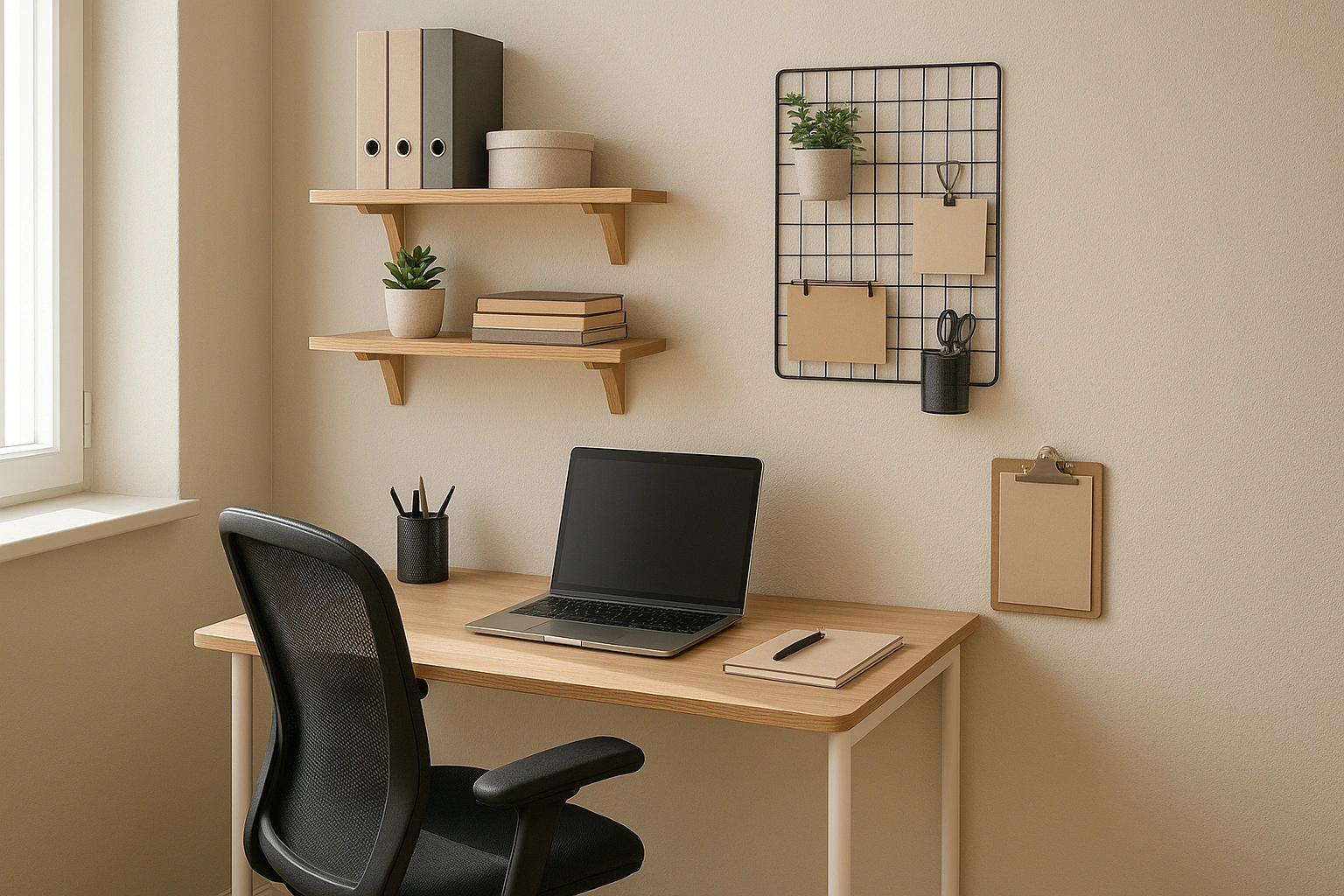
Real-Life Inspiration: A Closet Office Makeover
I live in a one-bedroom apartment where every square foot is precious. For months, my “office” was the dining table, a chaotic space that I had to clear three times a day. My solution? A small, underutilized closet. The transformation was a game-changer.
I started by removing the door and clothing rod. I painted the interior a bright white to reflect light. I installed a custom-cut piece of butcher block as a floating desk, deep enough for my laptop but shallow enough to not feel cramped. Above it, I added three floating shelves for my monitor, notebooks, and a small plant. A pegboard on one side holds all my pens, cables, and headphones. It’s a perfect example of one of my favorite tiny home office ideas.
| Pros | Cons |
|---|---|
| Completely hidden when not in use | Can feel a bit enclosed |
| Forces organization and minimalism | Limited space for multiple monitors |
| Extremely cost-effective to set up | Requires good, focused lighting |
| Separates work from living space | Not ideal for those who are claustrophobic |
Comparison: Top 3 Space-Saving Desks for Tiny Offices
Choosing the right desk is the most critical decision for your compact office. Here’s a breakdown of three popular options.
| Desk Type | Key Features | Pros | Cons | Best For |
|---|---|---|---|---|
| Floating Desk | Wall-mounted, no legs, often foldable. | Ultimate space-saver; creates a clean, minimal look. | Requires wall installation; limited weight capacity. | The smallest of spaces, like hallways or bedroom corners. |
| Ladder Desk | Leans against the wall with built-in shelving above. | Combines desk and storage in one footprint. | Can look cluttered if not styled well; less desk surface. | Renters or anyone needing integrated vertical storage. |
| Folding Desk | Can be completely collapsed and stored away. | Maximum flexibility; can be used in any room. | Often less sturdy; needs to be set up and put away daily. | Multi-purpose rooms or those who only work from home occasionally. |
Common Mistakes to Avoid in a Small Workspace Setup
Creating a functional tiny office involves sidestepping some common pitfalls.
- Ignoring Ergonomics: Using a dining chair or slouching over a low table is a recipe for back pain. Invest in an adjustable, ergonomic chair and ensure your monitor is at eye level. As publications like Wired often point out, proper ergonomics are crucial for long-term health.
- Poor Lighting: A single overhead light won’t cut it. Eye strain and headaches are common results. Always add a dedicated task light on your desk.
- Cable Chaos: Visible, tangled wires make a small space look instantly cluttered. Use cable ties, clips, and raceways to hide and manage cords.
- Forgetting Personality: A sterile, boring space is uninspiring. Add a small plant, a favorite piece of art, or a colorful mug to make the space feel like your own.
- Over-cluttering the Surface: Your desk surface is prime real estate. Keep only the absolute essentials on it. Everything else should go vertical or be stored away.
Expert Tips for a Minimal Office Idea That Works
We asked interior designer and small-space expert, Maria Jensen, for her top tips.
“The golden rule for a tiny office is to edit ruthlessly. Before you buy anything, ask yourself: ‘Is this absolutely essential, and does it serve more than one purpose?’ A beautiful box that hides your chargers is better than a standalone charger.”
– Maria Jensen
Here are some more expert-level tips:
- Use a Monitor Arm: Clamp a monitor arm to your desk to free up the entire surface area underneath your screen.
- Think in Zones: Even in a tiny space, create zones. A shelf for “to-do,” a box for “to-file.”
- Invest in Wireless Tech: A wireless keyboard, mouse, and printer eliminate a significant amount of cable clutter.
- Use a Portable File Box: Instead of a bulky filing cabinet, use a sleek, portable file box you can tuck away at the end of the day.
- Leverage the Power of Mirrors: Placing a small mirror nearby can create an illusion of depth, making the space feel larger.
FAQ Section
Q: How can I create a home office with no extra room?
A: Look for “dead space” in your home. This could be a wide hallway, the area under a staircase, a corner of your bedroom or living room, or even a large closet. A floating or folding desk can make almost any vertical surface a potential office.
Q: What is the best desk for a very small space?
A: A wall-mounted, fold-down desk is often the best choice as it takes up zero floor space when not in use. For a less permanent solution, a slim console table can double as a desk.
Q: How do I hide my office when I have guests?
A: A folding screen is a stylish and easy way to conceal your workspace. Alternatively, you can build your office inside an armoire or cabinet (a “cloffice”) that can be closed up completely.
Q: How can I make my tiny office look stylish?
A: Stick to a cohesive color palette (2-3 colors). Invest in beautiful storage boxes and office accessories. Add a small plant and a single piece of art. Good design makes any space feel more intentional and less cluttered.
Q: Is it expensive to set up a tiny home office?
A: Not at all! You can create a functional and stylish space on a budget. Look for secondhand furniture, use DIY shelving solutions, and focus on decluttering what you already own rather than buying new organizers.
Conclusion
Creating a productive and inspiring workspace doesn’t require a dedicated room. With a bit of creativity and strategic planning, any small corner can turn into a functional spot, especially when you apply tiny home office ideas that are simple yet effective.
By going vertical, choosing multi-functional furniture, and mastering a compact desk layout, you can design a space that works perfectly for your needs. These practical tiny home office ideas help you save space while keeping your setup stylish and efficient.
The best part is how seamlessly the right approach can blend into your daily routine. Clever tiny home office ideas ensure your work zone boosts focus during the day and becomes invisible when it’s time to relax.
Now go find that perfect nook and transform it with smart tiny home office ideas that match your lifestyle and inspire you to stay productive.