Introduction
Imagine working in a space filled with warmth, vibrancy, and a clear view of the outside world. It’s not just a dream; it’s the profound impact of a natural light home office on your work environment. Studies consistently show that access to sunlight can dramatically improve mood, boost productivity, and even enhance sleep quality.
In 2025, as remote work continues to redefine professional lives, creating a natural light home office setup isn’t a luxury – it’s a smart strategy for health and performance. With thoughtful planning, you can design a workspace that takes full advantage of daylight, reducing the need for artificial lighting and energy costs.
This guide will walk you through creative natural light home office ideas, from positioning your desk near windows to using reflective surfaces that amplify brightness. By applying these natural light home office tips, you’ll ensure your space feels open, refreshing, and highly supportive of both focus and relaxation.
What is a Natural Light Home Office?
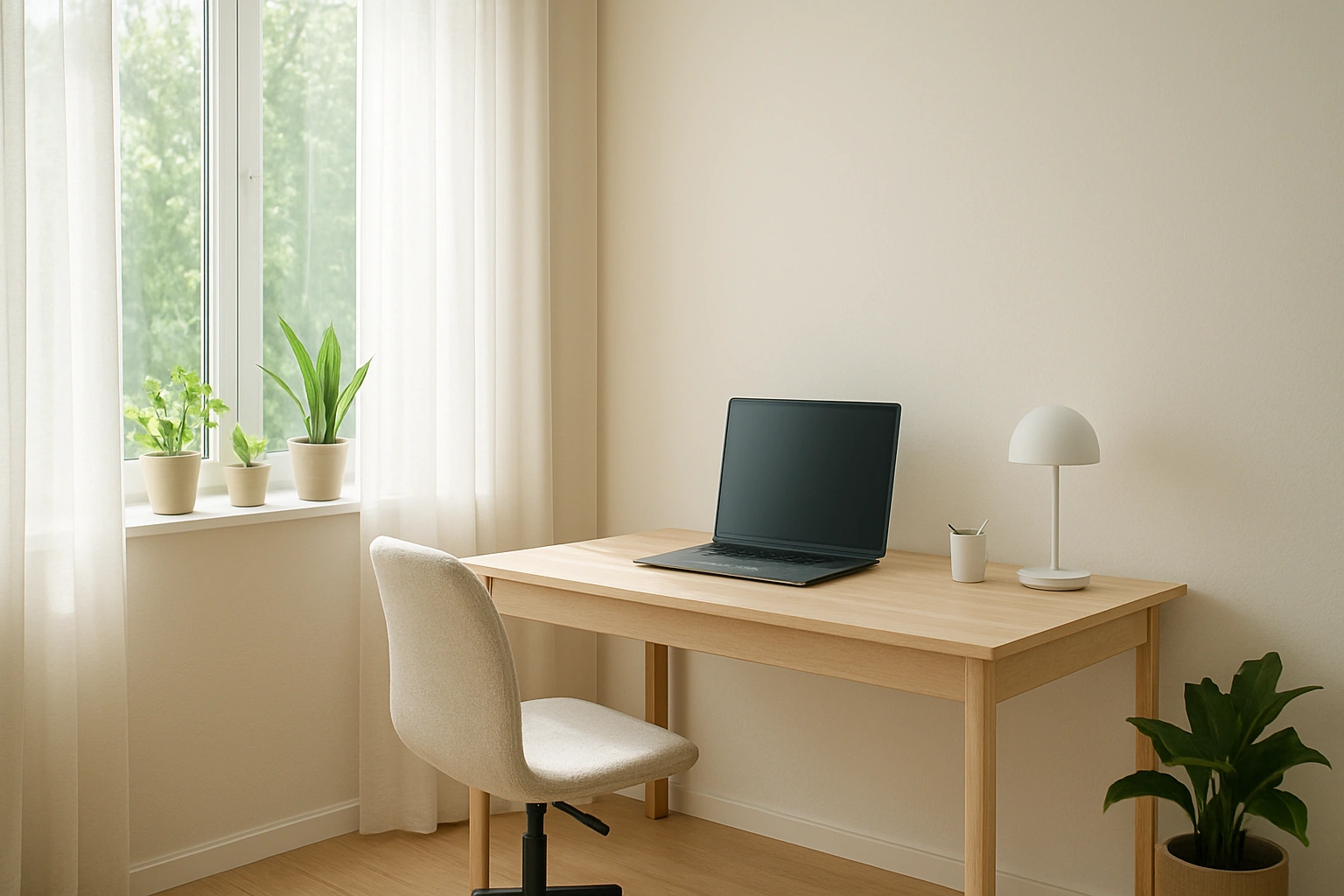
A natural light home office is a workspace thoughtfully designed to maximize exposure to sunlight, leveraging its numerous benefits for daily living. Creating a natural light home office isn’t only about placing a desk by a window; it’s about a holistic setup that makes the most of daylight for both productivity and comfort.
When building your natural light home office, you need to consider layout, color schemes, furniture placement, and window treatments that work together to optimize brightness. A well-designed natural light home office ensures that every corner feels open, energizing, and supportive of focus throughout the day.
In 2025, with an increased focus on employee well-being and sustainable living, the concept of a natural light home office has gained significant traction. People are realizing that a natural light home office not only looks appealing but also nurtures both physical and mental health.
Research continues to highlight how a natural light home office positively impacts circadian rhythms, leading to better sleep and reduced stress. This reinforces the idea that designing a natural light home office is no longer optional, but a key part of building a healthier lifestyle.
Future trends also indicate a move towards biophilic design – integrating natural elements into indoor spaces – which pairs perfectly with the philosophy of a natural light home office. The importance of daylight in boosting productivity, mood, and long-term wellness makes it a central part of modern workspace planning.
(Source: Wired Magazine – Example on Light & Productivity)
Why It Matters: Benefits of a Sunlit Workspace
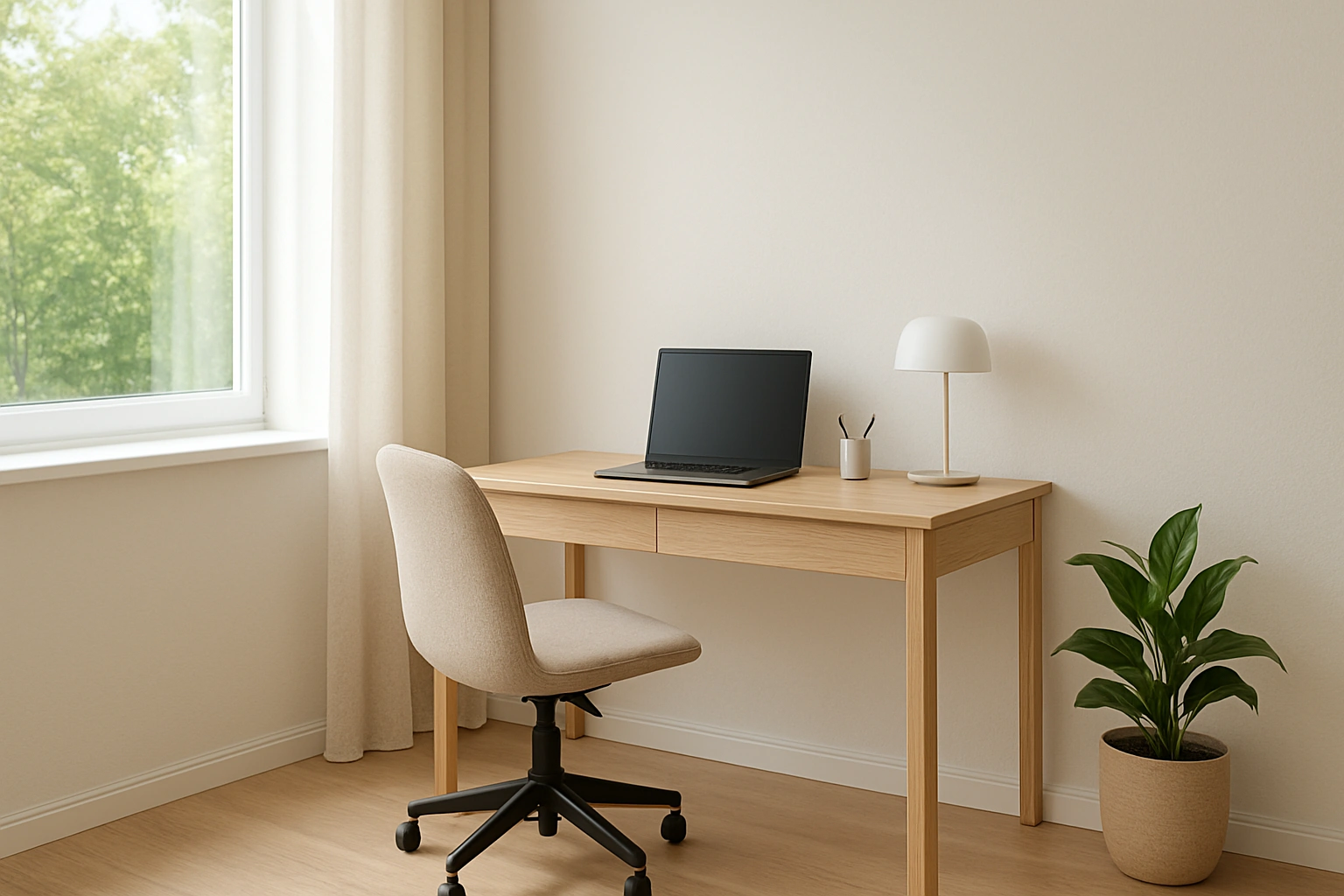
Embracing natural light home office ideas isn’t just about aesthetics; it’s about investing in your health, happiness, and efficiency. The benefits are profound and far-reaching.
Enhance Mood & Well-being
Natural light plays a crucial role in regulating our circadian rhythms, which control our sleep-wake cycle. Exposure to daylight signals to our bodies that it’s daytime, boosting alertness and mood. A sunlit workspace can effectively combat Seasonal Affective Disorder (SAD) and reduce symptoms of depression and anxiety. This creates a more positive and energizing atmosphere, making your workday more enjoyable and sustainable. You’ll feel more awake and less prone to midday slumps.
Boost Productivity & Focus
A well-lit environment improves visual comfort, reducing the effort your eyes need to make. This directly translates to improved concentration and cognitive performance. Workers in offices with natural light show higher levels of engagement and faster task completion. The connection to the outside world, even just a glimpse of a tree or the sky, can offer micro-breaks that refresh the mind, leading to sustained focus throughout the day.
Reduce Eye Strain & Headaches
Artificial light, especially harsh overhead fluorescent lights, can cause significant eye strain, leading to headaches, blurred vision, and fatigue. Natural light provides a full spectrum of colors and softer illumination, which is much easier on the eyes. By incorporating a smart window desk setup, you can drastically minimize these common ailments, making your work hours more comfortable and productive. This also lessens reliance on artificial light, which can flicker imperceptibly, causing discomfort.
Improve Energy Efficiency
Maximizing natural light means you’ll depend less on electric lights during the day. This directly translates to lower energy bills and a smaller carbon footprint. Beyond just lighting, careful consideration of window placement can also help regulate indoor temperature, reducing the need for excessive heating or air conditioning. It’s an eco-friendly approach that benefits both your wallet and the planet. For more ways to optimize your workspace for well-being, explore our tips on creating a healthier work environment.
How It Works: Core Strategies for a Bright Office Layout
Transforming your home office into a naturally illuminated haven involves several key strategies. Here’s how to implement effective **natural light home office ideas** step-by-step.
- Optimal Desk Placement (The Foundation):
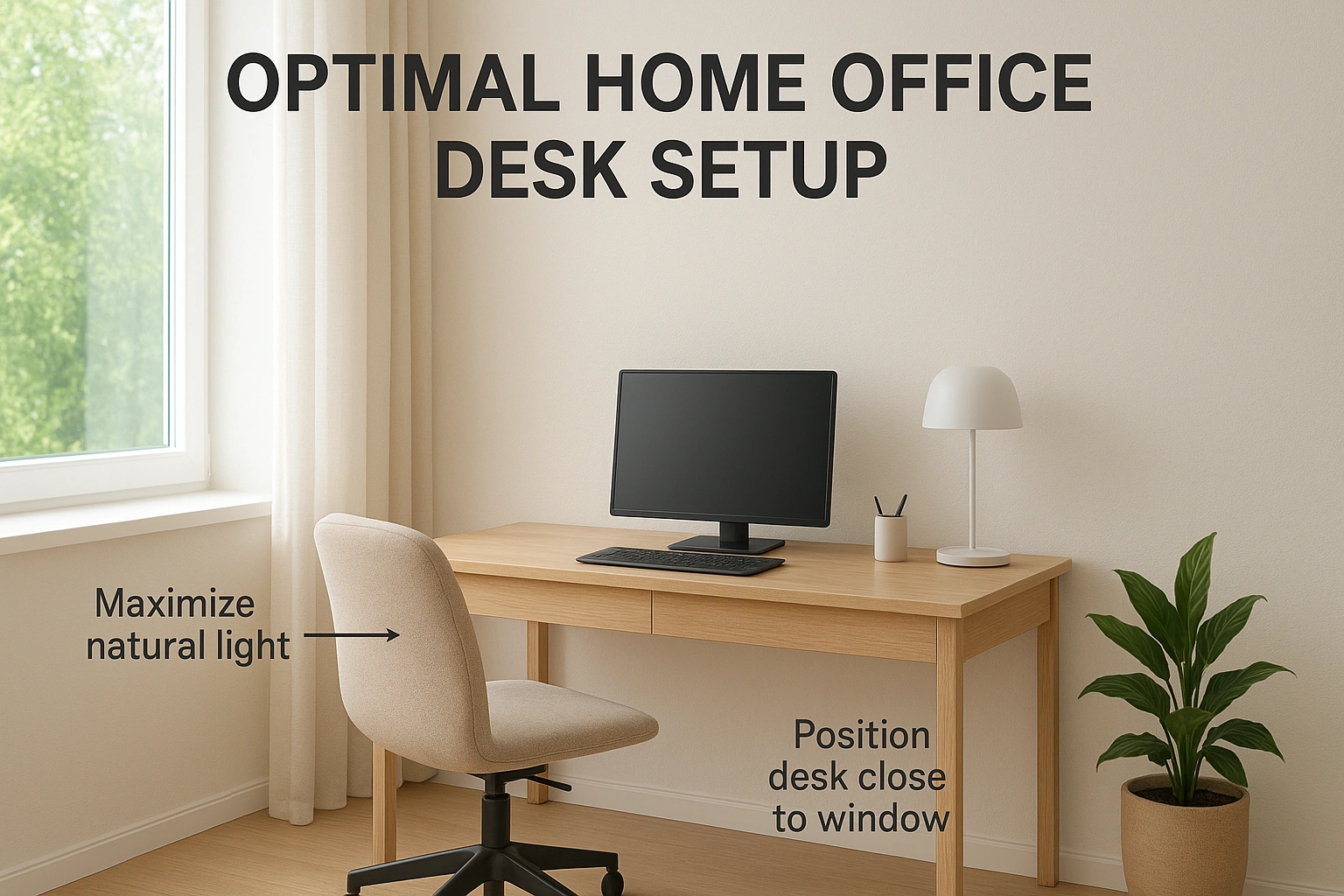
- Perpendicular to Window: Position your desk so that the window is to your side. This provides consistent, even light across your workspace, minimizing shadows and direct glare on your screen.
- Avoid Facing/Backing Window: Facing a window can cause intense glare on your face and screen. Backing a window can create harsh shadows on your work surface and cause your monitor to appear too dim.
- Consider Sun Path: Observe how the sun moves throughout the day. If a window gets intense morning or afternoon sun, plan to use adjustable window treatments.
- Strategic Window Treatments:
- Sheer Curtains/Blinds: These diffuse harsh light, reducing glare while still allowing plenty of brightness.
- Top-Down/Bottom-Up Shades: Offer excellent flexibility, allowing you to control light and privacy precisely, letting in light from above while blocking lower glare.
- Light-Filtering Roller Shades: Provide privacy and glare reduction without completely blocking natural light.
- Reflective Surfaces & Color Palette:
- Light Wall Colors: Paint walls in white, off-white, light grays, or pale blues/greens. These colors reflect natural light, making the room feel larger and brighter.
- Mirrors: Strategically placed mirrors opposite windows can bounce natural light deeper into the room, effectively expanding the light source.
- Glossy/Metallic Accents: Use furniture or decor with reflective finishes (e.g., a glass desk, metallic lamp) to further spread light.
- Clear Pathways for Light:
- Keep Windows Unobstructed: Avoid placing tall furniture or heavy drapes directly in front of windows that could block light.
- Declutter Window Sills: A clean window sill allows maximum light penetration.
Here’s a simplified process flow for optimizing your bright office layout:
Chart: Natural Light Office Optimization Flow
| Step | Action | Goal | Impact |
|---|---|---|---|
| 1 | Assess Light Source Identify best window(s), sun path throughout day. |
Understand light availability & intensity. | Informed planning for layout. |
| 2 | Optimize Desk Placement Position desk perpendicular to primary window. |
Minimize glare, maximize even light. | Reduced eye strain, consistent illumination. |
| 3 | Choose Window Treatments Install sheer blinds, light-filtering shades, or adjustable curtains. |
Control glare, maintain privacy, diffuse harsh light. | Comfortable visual environment. |
| 4 | Enhance Reflection Paint walls light colors, add mirrors, reflective decor. |
Spread light deeper, amplify brightness. | Overall brighter, more spacious feel. |
| 5 | Remove Obstructions Keep windows clear, declutter sills, use low furniture. |
Ensure maximum light entry. | Uninterrupted flow of natural light. |
| Total | Optimized Natural Light Home Office. |
Real-Life Sunlit Workspace Transformation: A Case Study
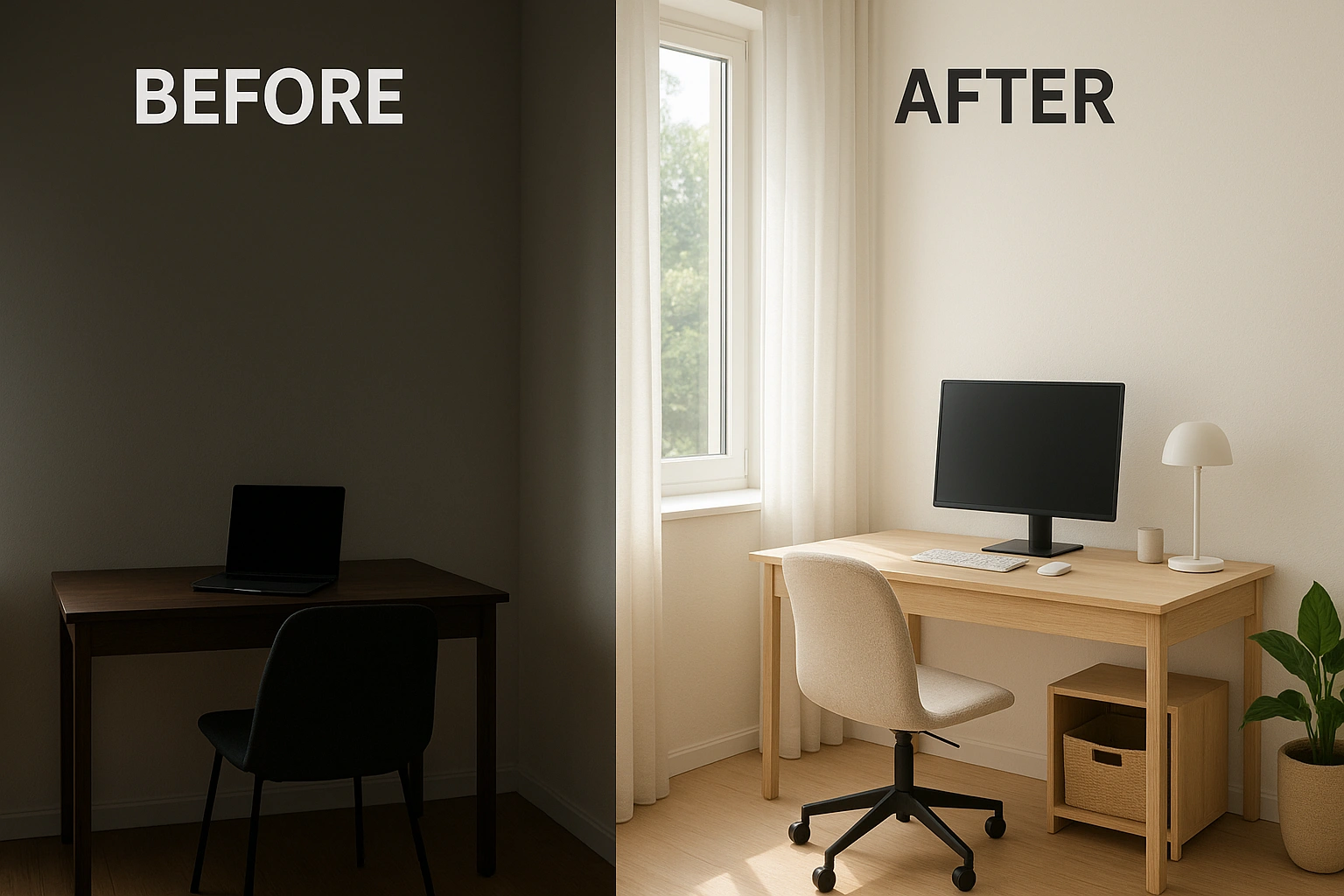
Let me share a real-world example of how a previously dim corner was transformed into a vibrant sunlit workspace, perfectly showcasing the benefits of a natural light home office.
By rearranging the layout and using light-reflective surfaces, the space evolved into a functional natural light home office that supported focus and creativity. Even a small area can feel open and energizing when designed with the principles of a natural light home office in mind.
This transformation proves that anyone can adapt their living space into a natural light home office with thoughtful planning, clever furniture choices, and smart positioning near windows.
The Challenge:
My client, Lena, worked as a content writer in a small apartment, and she longed for a natural light home office that could energize her days. Her existing desk faced a wall, leaving her feeling enclosed and cut off from any source of sunlight.
She constantly relied on lamps instead of creating a natural light home office, which made her feel sluggish and contributed to significant eye strain. The lack of natural brightness impacted both her mood and productivity.
Lena’s goal was to redesign her corner into a simple but effective natural light home office without undergoing a costly renovation. Even in limited space, she knew that optimizing sunlight could completely transform her work experience.
Through thoughtful adjustments, she eventually created her own natural light home office that boosted her energy, improved focus, and made her workspace far more inspiring.
The Transformation:
- Desk Repositioning: We moved her desk to be perpendicular to the largest window in the room. This instantly opened up the space and flooded her work area with soft, ambient light.
- Window Treatments: We replaced heavy, dark curtains with light-filtering sheer blinds ($45). These allowed sunlight to stream in while diffusing any harsh glare during peak sun hours.
- Reflective Elements: A large, full-length mirror ($70 from a discount store) was placed on the wall opposite the window, effectively doubling the light entering the room. We also decluttered her desk and added a small, metallic pen holder ($10).
- Color Refresh: Lena repainted her accent wall from a deep blue to a pale sage green ($30 for paint), which reflected light beautifully and created a calm, natural ambiance.
- Minimalist Decor: We removed bulky items from the windowsill and replaced them with a couple of small, light-colored planters ($15 total) with easy-care Pothos plants.
Total Spend: $45 (blinds) + $70 (mirror) + $10 (pen holder) + $30 (paint) + $15 (planters) = $170.
Lena’s office is now a bright, inviting space. She reports feeling more energized, fewer headaches, and a significant improvement in her daily mood and focus. This demonstrates how a thoughtful window desk setup can dramatically alter your work experience.
Pros and Cons of Lena’s Sunlit Setup:
| Pros | Cons |
|---|---|
| Improved Mood & Energy: Feels more vibrant. | Potential for Glare: Needs active management during peak sun. |
| Reduced Eye Strain: Easier on the eyes than artificial light. | Heat Gain: Room can get warmer in direct sunlight. |
| Boosted Productivity: Better focus and alertness. | Fading of Fabric/Art: Direct sun can damage items over time. |
| Lower Energy Bills: Less reliance on electric lights. | |
| Enhanced Aesthetics: Inviting and natural look. |
Comparing Window Treatments for Optimal Natural Light
Choosing the right window treatment is crucial for maximizing natural light home office ideas while managing glare and privacy. Here’s a comparison of popular options for your bright office layout.
| Option | Features | Pros | Cons | Best For |
|---|---|---|---|---|
| Sheer Curtains/Blinds | Light, translucent fabric. | Diffuses light, maintains privacy, soft aesthetic. | Limited glare reduction for direct sun. | General light diffusion, gentle privacy. |
| Top-Down/Bottom-Up Shades | Can be opened from top or bottom. | Excellent light & privacy control, reduces glare. | Higher cost, can be more complex to install. | Targeted light management, areas with privacy concerns. |
| Light-Filtering Roller Shades | Single panel, rolls up/down. | Clean look, good glare & heat reduction. | Less light control than top-down, can be all-or-nothing. | Modern aesthetic, strong direct sun. |
| Adjustable Louvered Blinds (Wood/Faux Wood) | Horizontal slats that tilt. | Precise light direction, classic look, good privacy. | Can collect dust, may block more light than sheers. | Traditional decor, highly adjustable light. |
| Smart Tinting/Film | Applied directly to glass, changes opacity. | High-tech, instant control, no physical obstruction. | Very high cost, professional installation. | Cutting-edge solutions, large windows, high budget. |
Common Mistakes to Avoid When Designing Your Natural Light Home Office
While the pursuit of a sunlit workspace is beneficial, it’s easy to make errors that can undermine its effectiveness. Here’s what to avoid.
- Placing Your Desk Facing or Backing a Window: Mistake: Setting up your computer monitor directly in front of or behind a window. Correction: Always position your desk perpendicular to the window. This eliminates direct glare on your screen or blinding light in your eyes, creating a comfortable visual environment and making it a true **natural light home office idea**.
- Ignoring Glare Control: Mistake: Assuming more light is always better and not having any window treatments. Correction: Even beautiful natural light can cause glare. Invest in adjustable blinds or sheer curtains that can diffuse or block harsh sun when needed. An anti-glare screen for your monitor is also a smart addition for any window desk setup.
- Using Dark, Light-Absorbing Colors: Mistake: Painting walls dark colors or having heavy, dark furniture near windows. Correction: Opt for light-colored paint (whites, pale grays, soft blues) and light-toned furniture. These surfaces reflect light, bouncing it deeper into the room and making it feel brighter and more expansive.
- Obstructing Windows with Furniture or Decor: Mistake: Placing tall bookshelves, filing cabinets, or heavy drapes directly in front of windows. Correction: Keep windows clear. Use low-profile furniture or place tall items on walls that don’t have windows. Opt for light, minimalist window dressings to allow maximum light penetration.
- Neglecting Supplemental Lighting: Mistake: Relying solely on natural light and having no good artificial light for evenings or cloudy days. Correction: While natural light is primary, a good task lamp with adjustable brightness and color temperature is essential. This ensures consistent, ergonomic lighting regardless of the time of day or weather, supporting your bright office layout.
- Forgetting About Heat Gain: Mistake: Allowing direct, intense sunlight to overheat your office in warmer months. Correction: While you want light, you might not want all the heat. Use thermal blinds or shades to block excessive heat while still allowing diffused light, or ensure good ventilation.
- Not Considering Screen Reflection: Mistake: Placing shiny objects or a window directly behind your monitor, causing distracting reflections. Correction: Arrange your workspace to minimize reflections on your screen. This might involve adjusting your desk, monitor angle, or moving reflective decor.
Expert Tips & Best Practices for Maximizing Your Natural Light Office
To truly harness the power of a bright office layout, consider these expert tips and best practices for your **natural light home office ideas**.
- Layer Your Lighting: Combine natural light with a good quality, adjustable task lamp and soft ambient lighting. This allows you to adapt to changing daylight conditions and ensures a balanced illumination at all times.
- Introduce Greenery: “Plants not only enhance air quality but also bring a touch of nature that complements natural light, boosting well-being and concentration,” suggests biophilic design expert, Dr. Lena Hansen. Place small plants on your desk or windowsill.
- Clean Windows Regularly: It sounds simple, but clean windows make a significant difference in how much natural light enters your space. Smudges and dirt can drastically reduce light transmission.
- Use Diffusers for Harsh Light: If a window receives intense direct sunlight, a sheer curtain or a frosted film can diffuse the light, making it softer and more pleasant for your sunlit workspace.
- Consider Exterior Landscaping: If possible, trim any overgrown bushes or trees outside your window that might be blocking natural light from entering your office.
- Install an Anti-Glare Monitor Screen: Even with perfect desk positioning, some glare can occur. An affordable anti-glare screen protector can make a world of difference for eye comfort during your window desk setup.
- Rotate Your Workspace (If Applicable): If you have multiple windows or flexible spaces, consider rotating your main work area seasonally to take advantage of the best natural light throughout the year.
- Choose Light-Colored Desk Surfaces: A light-colored desk will reflect light upwards, further brightening your workspace compared to a dark desk which absorbs light.
- Integrate Smart Lighting: For truly optimized control, smart bulbs can adjust their color temperature to mimic natural daylight cycles, supporting your circadian rhythm even when natural light isn’t sufficient.
- Personalize with Bright Accents: Use small, vibrant accessories or artwork to add pops of color that reflect the energetic feeling of a sunlit space.
Frequently Asked Questions (FAQ) About Natural Light Home Offices
Here are some common questions about creating a well-lit and productive home office with natural light.
Q: Why is natural light important for a home office?
A: Natural light significantly boosts mood, enhances productivity, reduces eye strain, and can even improve sleep quality. It connects you to the outdoors, creating a more pleasant and healthy work environment.
Q: What is the best way to position my desk for natural light?
A: Position your desk perpendicular to the window. This minimizes direct glare on your screen and face while still providing ample indirect light. Avoid facing directly into or away from the window.
Q: How can I reduce glare in a sunlit workspace?
A: Use adjustable window treatments like sheer blinds, cellular shades, or top-down/bottom-up blinds. An anti-glare screen for your monitor and proper desk positioning can also help significantly.
Q: Can I still have natural light if my office doesn’t have a large window?
A: Yes! Maximize what little light you have by using mirrors to reflect it, choosing light-colored paint and furniture, and keeping window areas uncluttered. Strategic artificial lighting can also mimic natural light.
Q: Are there any downsides to having a lot of natural light in a home office?
A: Potential downsides include glare on screens, excessive heat in summer, and fading of furniture or artwork. These can usually be managed with appropriate window treatments and positioning.
Q: What paint colors are best for maximizing natural light?
A: Light, reflective colors like white, off-white, light gray, pale blues, and soft greens are excellent choices. They bounce light around the room, making it feel brighter and more spacious.
Conclusion
Embracing natural light home office ideas is one of the most impactful ways to elevate your remote work experience. By strategically optimizing your natural light home office layout and incorporating smart design choices, you can create a sunlit workspace that not only looks appealing but also profoundly benefits your mood, productivity, and overall well-being. From thoughtful desk placement to effective glare management, every detail contributes to building a natural light home office that feels both invigorating and sustainable.
Don’t underestimate the power of natural light. A natural light home office makes use of a free, abundant resource that can transform your workday from mundane to magnificent. Start implementing these natural light home office strategies today and notice how your productivity and peace of mind soar.
Ready to take your budget setup to the next level? Explore more advanced tips on maximizing your home office space by visiting
AI Generatif
.
Cheap remote work setup is within reach – go build it!
For cutting-edge insights on how environmental design impacts well-being, refer to publications like Statista’s reports on environmental design. Illuminate your path to a more joyful and efficient workday!