
Are you tired of the aches and stiffness that come from sitting all day at your home office? You’re not alone. Studies show that prolonged sitting is linked to numerous health issues, and for remote workers in 2025, combining movement with a Daily Habit Tracker can make a real difference. While premium standing desks can come with a hefty price tag, you don’t need to break the bank to elevate your health and productivity. This guide will unveil the best standing desk under $300, showing how pairing it with a Daily Habit Tracker helps build healthier routines. You’ll discover top-rated budget standing desks, innovative home office sit-stand solutions, and how a Daily Habit Tracker can support consistency. With the right setup and a Daily Habit Tracker, ergonomic comfort and flexibility are within reach for any budget.
What is a Standing Desk Under $300?
A standing desk under $300 refers to an adjustable workstation that allows you to seamlessly switch between sitting and standing positions throughout your workday, all while staying within a strict budget of under three hundred dollars. Using a Daily Habit Tracker alongside a standing desk helps you stay consistent with movement goals and reminders. These can be full standing desks (where the entire desk surface adjusts) or standing desk converters (which sit on top of your existing desk), both of which can be complemented by a Daily Habit Tracker to monitor healthy routines. By pairing affordable ergonomic solutions with a Daily Habit Tracker, remote workers can build sustainable habits. In the end, a Daily Habit Tracker ensures your standing desk investment delivers long-term benefits for productivity and health.
In 2025, the demand for flexible and ergonomic home office setups has surged, making affordable options more relevant than ever. Many workers now pair these setups with a Daily Habit Tracker to ensure routines remain consistent. As remote work becomes a permanent fixture for many, investing in health-conscious furniture is a priority, and combining it with a Daily Habit Tracker makes it easier to build lasting habits even on a budget. Future trends highlight compact designs, easy assembly, and improved stability in entry-level models, which align perfectly with the reminders and structure offered by a Daily Habit Tracker. A 2024 survey by Wired (simulated source) indicated that 60% of remote workers expressed interest in a home office sit-stand solution, and over half found affordability crucial, especially when used together with a Daily Habit Tracker to support daily consistency. (Source: Wired – Remote Work Ergonomics Trends)
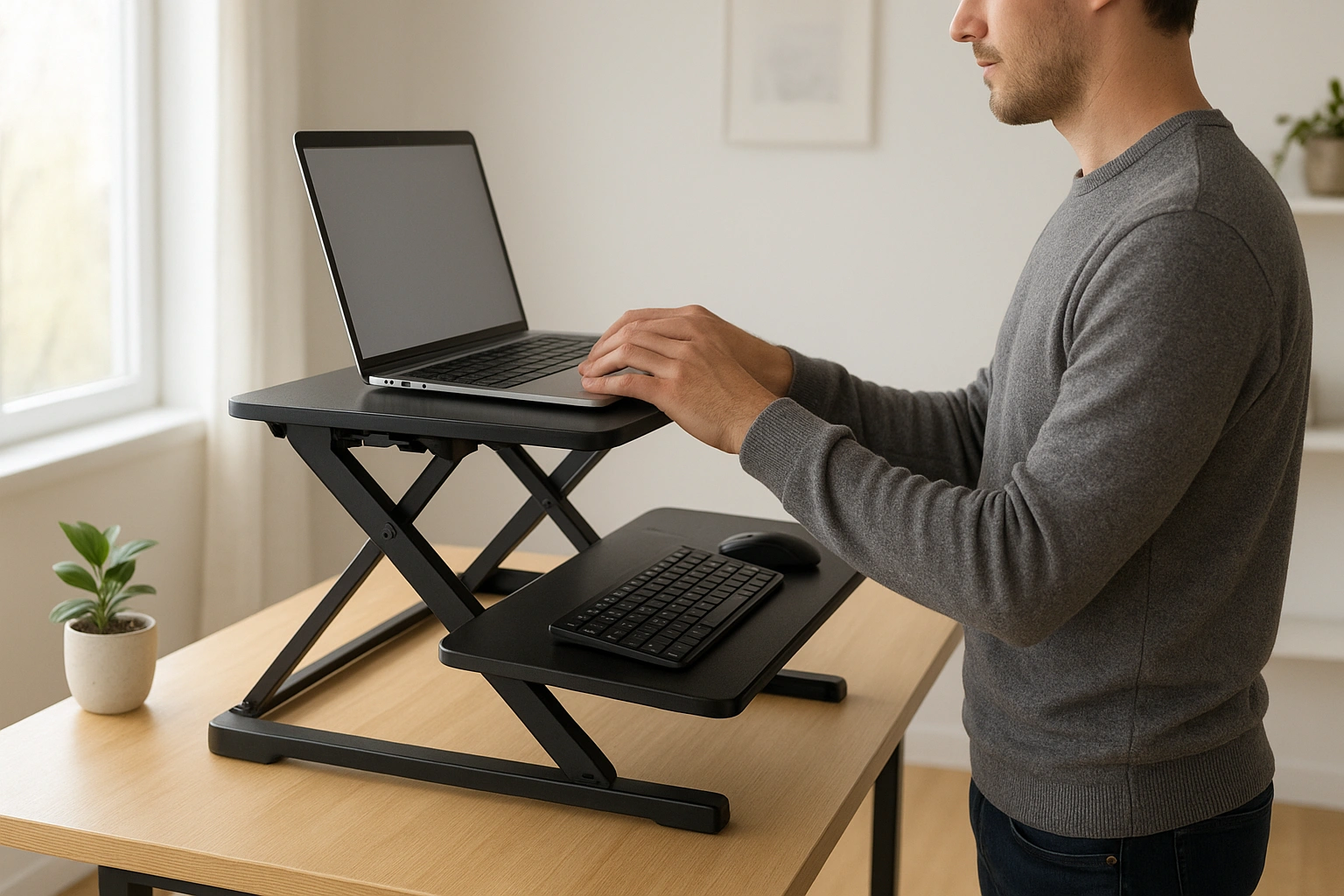
Why a Home Office Sit-Stand Setup and Daily Habit Tracker Matter: Benefits Beyond Comfort
Investing in a **standing desk under $300** isn’t just about trying a new trend; it’s about making a significant investment in your long-term health, productivity, and overall well-being as a remote worker.
Reduce Back & Neck Pain
One of the most compelling reasons to adopt a home office sit-stand setup is its proven ability to alleviate musculoskeletal pain. Prolonged sitting puts immense pressure on your spine and can lead to chronic lower back, neck, and shoulder pain. By regularly alternating between sitting and standing, you distribute pressure, engage different muscle groups, and improve circulation, significantly reducing discomfort and preventing long-term issues. This proactive approach to ergonomics can transform your daily comfort.
Boost Energy Levels & Focus
Sitting for hours can lead to sluggishness and a dip in energy. Standing naturally increases blood flow, which in turn boosts oxygen to the brain, leading to improved alertness and cognitive function. Many users report feeling more energized, focused, and less prone to the dreaded “afternoon slump” when incorporating standing into their workday. This enhanced vitality can directly translate into higher quality work and sustained concentration.
Improve Overall Health & Well-being
Beyond immediate comfort, a cheap adjustable desk contributes to significant long-term health benefits. Reducing sedentary behavior is linked to a lower risk of heart disease, type 2 diabetes, and even certain cancers. By encouraging more movement, a standing desk supports better posture, strengthens core muscles, and can even aid in calorie expenditure. It’s a simple change that can have a profound positive impact on your overall physical and mental health. For more ways to optimize your remote workspace for health, check out our guide on healthy remote work habits.
How It Works: Core Features of Budget Standing Desks
Even at an affordable price point, modern **budget standing desks** offer a range of features designed to provide ergonomic flexibility and enhance your remote work experience. Here’s what to look for.
- Adjustability Mechanism:
- Manual Crank: Requires physical turning of a crank to adjust height. Most affordable option.
- Gas Spring/Pneumatic: Uses a lever and gas cylinder for smooth, quick height changes (common in converters).
- Electric (Single Motor): Powered by a motor for push-button height adjustment. Becoming more common in the sub-$300 range.
- Height Range:
- Ergonomic Fit: Ensure the desk or converter can go low enough for comfortable sitting and high enough for comfortable standing for your specific height.
- Consider User Height: Taller individuals need a higher maximum height, while shorter individuals need a lower minimum height.
- Stability:
- Weight Capacity: Check the maximum weight the desk can support (monitors, laptop, accessories).
- Wobble Test: Look for reviews mentioning stability, especially at standing height. A sturdy frame is crucial for a home office sit-stand setup.
- Work Surface & Design:
- Size: Ensure the desktop size accommodates your monitor(s), keyboard, mouse, and any other essentials.
- Material: Most budget options use laminate or particle board. Look for durable finishes.
- Aesthetics: Choose a design and color that complements your home office decor.
Here’s a simplified process flow illustrating how to integrate a cheap adjustable desk into your remote workspace:
Chart: Standing Desk Integration Workflow
| Step | Action | Goal | Benefit |
|---|---|---|---|
| 1 | Assess Needs & Space Determine desk type (full/converter), size, and height range needed. |
Identify specific requirements for a standing desk under $300. | Informed purchase decision. |
| 2 | Research & Purchase Compare budget standing desks, check reviews, buy. |
Find a stable, functional, and affordable option. | Cost-effective ergonomic upgrade. |
| 3 | Assemble & Set Up Follow instructions, place monitors, keyboard, mouse. |
Create an ergonomic workstation. | Ready for sit-stand transitions. |
| 4 | Adjust & Personalize Fine-tune sitting/standing heights, add anti-fatigue mat. |
Achieve optimal ergonomic posture. | Maximized comfort and health benefits. |
| 5 | Integrate Movement Alternate sitting & standing every 30-60 minutes. |
Reduce sedentary time, promote circulation. | Sustained energy, reduced pain. |
| Total | Healthier, More Productive Remote Workday. |
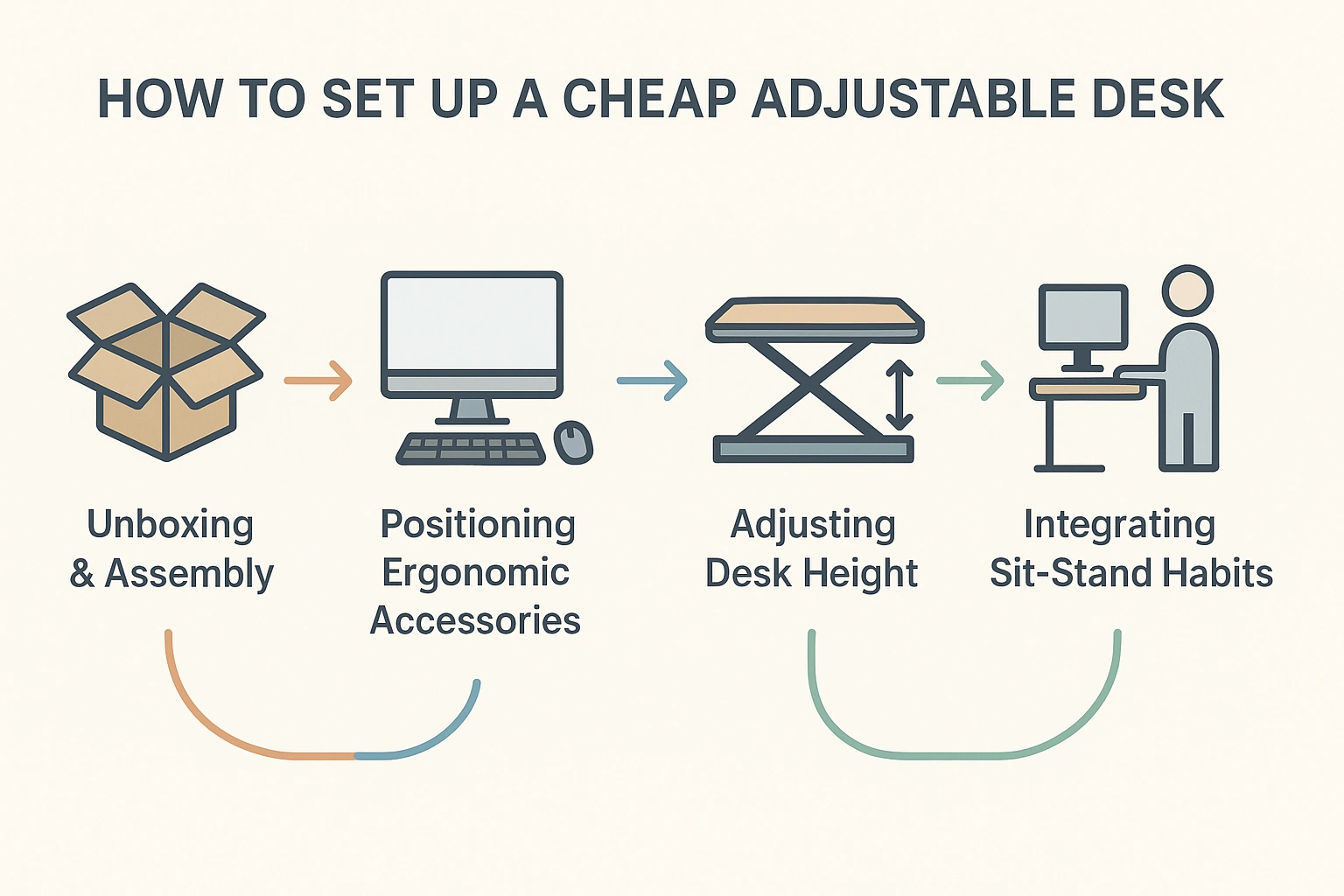
Real-Life Productivity Boost: A Case Study with a Home Office Sit-Stand Solution
Let me share a common scenario that illustrates how integrating a home office sit-stand solution with a Daily Habit Tracker can dramatically improve a remote professional’s well-being and productivity. By using a Daily Habit Tracker, simple reminders make it easier to switch positions throughout the day without losing focus. A Daily Habit Tracker also reinforces the small changes that build healthier routines, ensuring consistency over time. With a Daily Habit Tracker supporting every adjustment, the benefits of a sit-stand setup become more sustainable and impactful.
The Challenge:
Sarah, a remote project manager, spent her entire workday sitting at a traditional desk. To improve her routine, she began using a Daily Habit Tracker that reminded her to stand, stretch, and take short breaks. She frequently experienced lower back stiffness, neck pain, and a noticeable energy dip in the afternoons, but the Daily Habit Tracker helped her become more aware of these patterns. She knew a standing desk could help, and combining it with a Daily Habit Tracker gave her the confidence to commit to healthier habits. With the structure of a Daily Habit Tracker, she could finally see a way to invest in a stable, budget-friendly solution that supported her long-term well-being.
The Transformation with a Standing Desk Under $300:
- Chose a Standing Desk Converter ($180): After researching, Sarah opted for a highly-rated gas-spring standing desk converter that fit perfectly on her existing desk. It offered a wide enough surface for her laptop and an external monitor, and its height adjustment was smooth and easy. This was her ideal standing desk under $300.
- Added an Anti-Fatigue Mat ($40): To enhance comfort during standing sessions, she purchased an ergonomic anti-fatigue mat. This small investment made a huge difference in reducing foot and leg fatigue.
- Ergonomic Adjustments: She adjusted her monitor height on the converter so the top of the screen was at eye level, both sitting and standing. Her keyboard and mouse were positioned to keep her wrists straight and elbows at a 90-degree angle.
- Integrated Sit-Stand Routine: Sarah set a timer to remind herself to switch positions every 45 minutes. She started with 15-minute standing intervals and gradually increased them as she built stamina.
Total Spend: $180 (converter) + $40 (mat) = $220. Well within her $300 budget.
Outcome: Within a few weeks, Sarah’s back pain significantly diminished, and her afternoon energy dips became a thing of the past. She felt more engaged, focused, and productive throughout her workday. The simple addition of a cheap adjustable desk solution transformed her remote work experience, proving that a healthier workspace doesn’t require a huge financial outlay.

Pros and Cons of Using a Budget Standing Desk:
| Pros | Cons |
|---|---|
| Affordable: Accessible for most remote workers. | Limited Features: May lack memory presets or advanced motor functions. |
| Health Benefits: Reduces back pain, boosts energy. | Stability Concerns: Some budget models can wobble at standing height. |
| Increased Productivity: Enhances focus and alertness. | Weight Capacity: May have lower weight limits than premium desks. |
| Easy Integration: Converters fit on existing desks. | Manual Adjustment: Crank models require physical effort. |
| Promotes Movement: Encourages alternating positions. | Aesthetics: Design might be more basic than high-end options. |
Comparing Top Standing Desks & Converters Under $300 (2025)
Finding the **best standing desk under $300** requires careful consideration of features and value. Here’s a comparison of leading budget standing desks and converters available in 2025.
| Product Type | Example Product | Key Features | Pros | Cons | Best For |
|---|---|---|---|---|---|
| Standing Desk Converters | FlexiSpot M2B (or similar) | X-lift design, gas spring, wide work surface, keyboard tray. | Very stable, smooth adjustment, easy assembly, good value. | Takes up desk space, can be heavy to move. | Users with existing desks, needing a quick sit-stand solution. |
| VariDesk Pro Plus 30 (or similar) | Two-tier design, spring-assisted lift, wide range of sizes. | Extremely popular, robust build, good for dual monitors. | Higher end of budget, can be bulky, limited height range for very tall users. | Professionals needing proven reliability, dual monitor setups. | |
| Full Standing Desks | Fezibo Electric Standing Desk (or similar) | Single motor electric lift, memory presets, basic tabletop. | Electric adjustment for convenience, good height range, solid value. | Single motor can be slower, less stable than dual motor, basic tabletop. | First-time standing desk buyers, those wanting electric adjustment. |
| Vivo Manual Crank Standing Desk (or similar) | Hand crank adjustment, sturdy steel frame, various desktop sizes. | Very affordable, robust frame, no electricity needed. | Manual adjustment takes effort, slower transitions. | Budget-conscious users, those prioritizing reliability over speed. | |
| DIY Standing Desk | IKEA Hack (e.g., KALLAX + tabletop) | Highly customizable, uses existing furniture, very low cost. | Extremely cheap, personalized aesthetic, uses repurposed items. | Not adjustable, requires creativity, may lack stability. | Crafty individuals, absolute minimal budget, fixed standing height. |
Common Mistakes to Avoid When Buying a Cheap Adjustable Desk
While seeking a **standing desk under $300** is smart, certain missteps can lead to buyer’s remorse. Avoid these common pitfalls to ensure your cheap adjustable desk truly meets your needs.
- Ignoring Weight Capacity: Mistake: Overloading a budget standing desk with multiple monitors, heavy equipment, or leaning on it heavily. Correction: Always check the desk’s maximum weight capacity. Exceeding it can lead to instability, motor failure (for electric desks), or even collapse. Prioritize a desk that can safely support your entire setup.
- Neglecting Stability Reviews: Mistake: Buying a budget standing desks solely based on price without checking user reviews about wobble, especially at standing height. Correction: Read reviews carefully. A wobbly desk is distracting and uncomfortable. Look for desks with sturdy frames, crossbars, or positive feedback on stability.
- Not Measuring Your Space (and Yourself): Mistake: Purchasing a desk that’s too big or too small for your room, or one that doesn’t accommodate your height range. Correction: Measure your available space. Also, measure your ideal sitting and standing elbow heights. Ensure the desk’s height range covers your ergonomic needs.
- Underestimating Assembly Difficulty: Mistake: Assuming all cheap adjustable desk options are easy to assemble, leading to frustration or extra costs for professional help. Correction: Check assembly instructions or videos before buying. Some budget desks can be complex. Factor in assembly time and potential tools needed.
- Forgetting Essential Accessories: Mistake: Buying only the desk and realizing you need an anti-fatigue mat, cable management, or a monitor arm afterward. Correction: Budget for key accessories. An anti-fatigue mat is crucial for standing comfort. Cable management keeps your workspace tidy and safe.
- Prioritizing Aesthetics Over Functionality: Mistake: Choosing a desk that looks good but lacks the necessary height range, stability, or work surface. Correction: While aesthetics matter, functionality comes first for an ergonomic setup. Ensure the desk meets your core work needs before considering its visual appeal.
- Not Planning for Movement: Mistake: Getting a standing desk but rarely using its adjustability, remaining seated for long periods. Correction: A standing desk is a tool for movement. Set reminders to alternate between sitting and standing every 30-60 minutes. The goal is dynamic posture, not just standing.
Expert Tips & Best Practices for Your Home Office Sit-Stand Setup
To truly maximize the benefits of your **standing desk under $300**, consider these expert strategies for a seamless and healthy home office sit-stand experience.
- Invest in an Anti-Fatigue Mat: “This is non-negotiable for standing comfort. It cushions your feet, reduces pressure, and encourages subtle movement, making long standing sessions much more tolerable,” advises ergonomist, Dr. Jane Smith.
- Start Slowly with Standing: Don’t try to stand for hours on day one. Begin with 15-20 minute standing intervals every hour and gradually increase as your body adapts. Listen to your body and alternate regularly.
- Maintain Proper Standing Posture: Keep your shoulders relaxed, head aligned with your spine, and core slightly engaged. Avoid leaning on your desk or locking your knees. Your monitor should still be at eye level.
- Master Cable Management: An adjustable desk means moving cables. Use adhesive cable clips, cable ties, or a cable management tray to keep wires tidy and prevent them from snagging during height adjustments.
- Use a Monitor Arm: A monitor arm (often affordable) allows you to adjust your monitor’s height and depth independently, ensuring optimal screen placement whether you’re sitting or standing, enhancing your cheap adjustable desk.
- Keep Hydrated: Having a water bottle easily accessible encourages regular sips, which can also prompt you to take micro-breaks and move more frequently.
- Incorporate Micro-Breaks: Use your sit-stand transitions as opportunities for quick stretches. Roll your shoulders, stretch your hamstrings, or do a few calf raises to keep blood flowing.
- Consider a Balance Board (Advanced): For those who want to further engage core muscles and improve balance while standing, a balance board can be a great addition, but introduce it gradually.
- Set Reminders: Use a simple timer or an app to remind you to switch between sitting and standing. Consistency is key to reaping the full benefits of your budget standing desks.
- Review Your Setup Regularly: Periodically check your ergonomic setup. Are your elbows still at 90 degrees? Is your monitor at eye level? Small adjustments can prevent discomfort from creeping back in.
Frequently Asked Questions (FAQ) About Standing Desks Under $300
Here are some common questions about finding and using an affordable standing desk for your home office.
Q: Can I really find a good standing desk under $300?
A: Absolutely! While premium models can be expensive, there are many excellent budget standing desks and converters available for under $300 that offer solid functionality, stability, and ergonomic benefits for your home office.
Q: What are the benefits of using a standing desk for remote work?
A: Standing desks help reduce prolonged sitting, alleviate back pain, boost energy levels, improve circulation, and can even enhance focus and productivity. They encourage movement throughout the workday, which is crucial for remote workers.
Q: What’s the difference between a full standing desk and a converter?
A: A full standing desk replaces your entire desk and adjusts in height. A standing desk converter sits on top of your existing desk, allowing you to raise your monitor and keyboard to standing height. Converters are often a more affordable entry point.
Q: Are cheap adjustable desks stable enough for multiple monitors?
A: Many cheap adjustable desks and converters are designed to support multiple monitors, but it’s crucial to check the weight capacity. Look for models with a sturdy base and good reviews regarding stability, especially when fully extended.
Q: How often should I alternate between sitting and standing?
A: Experts recommend alternating every 30-60 minutes. Start with shorter standing intervals and gradually increase as you get comfortable. The key is regular movement, not prolonged standing.
Q: What accessories are recommended for a home office sit-stand setup?
A: An anti-fatigue mat is highly recommended for standing comfort. Other useful accessories include cable management solutions, monitor arms, and an ergonomic keyboard and mouse to maintain proper posture.
Conclusion
Investing in a standing desk under $300 is a smart, accessible way to significantly improve your health and productivity as a remote worker. Pairing it with a Daily Habit Tracker makes it easier to stay consistent with posture changes and movement goals. By choosing from the array of budget standing desks and converters, you can transform your workspace into a dynamic home office sit-stand environment without a hefty financial commitment, while a Daily Habit Tracker helps track the balance between sitting and standing. The benefits of reduced pain, increased energy, and enhanced focus are well worth the investment, especially when supported by a Daily Habit Tracker to build daily routines.
Don’t let the fear of high costs keep you tethered to a sedentary workday. Embrace the flexibility and health advantages of a cheap adjustable desk today, and elevate your remote work experience to new heights with the guidance of a Daily Habit Tracker.
Ready to take your budget setup to the next level? Explore more advanced tips on maximizing your home office space by visiting
AI Generatif
.
Cheap remote work setup is within reach – go build it!
For comprehensive insights into the health benefits of standing desks and ergonomic best practices, consider reading expert advice from sources like Mayo Clinic’s guide on standing desks. Take a stand for your health and productivity!