
Introduction
Do your feet dangle uncomfortably, or do you often cross your legs or slouch while working? You might be overlooking a key part of a proper footrest ergonomic setup. Many people underestimate how a well-chosen footrest ergonomic setup can unlock comfort and prevent pain during long workdays. In 2025, a thoughtful footrest ergonomic setup is essential for remote workers who spend hours at a desk. This guide will introduce simple footrest ergonomic setup strategies to improve posture, create a comfortable sitting setup, and make your office footrest a true support for health and productivity. Say goodbye to restless legs and enjoy a stable, pain-free workspace.
What is a Footrest Ergonomic Setup?
A footrest ergonomic setup involves thoughtfully integrating and adjusting a footrest into your workspace to support proper lower body posture. A well-planned footrest ergonomic setup ensures your feet are stable, allowing your knees and hips to maintain a healthy 90-degree angle. When your chair cannot reach the ideal height, a footrest ergonomic setup becomes essential for comfort and spinal alignment. Using a footrest ergonomic setup consistently helps reduce strain and keeps your legs and lower back supported throughout the day.
In 2025, as ergonomic awareness grows, a footrest ergonomic setup is being recognized as an essential part of a healthy workspace, not just an optional accessory. A proper footrest ergonomic setup is especially important for shorter individuals or anyone using fixed-height desks that are too high. Emerging trends show that smart footrest ergonomic setups with movement sensors and personalized adjustments are on the rise. A 2024 study by the Ergonomics Research Group found that consistent use of a footrest ergonomic setup reduced lower back pain by 25% and improved overall seated comfort by 30% among remote workers. (Source: Ergonomics Research Group – Footrest Benefits)
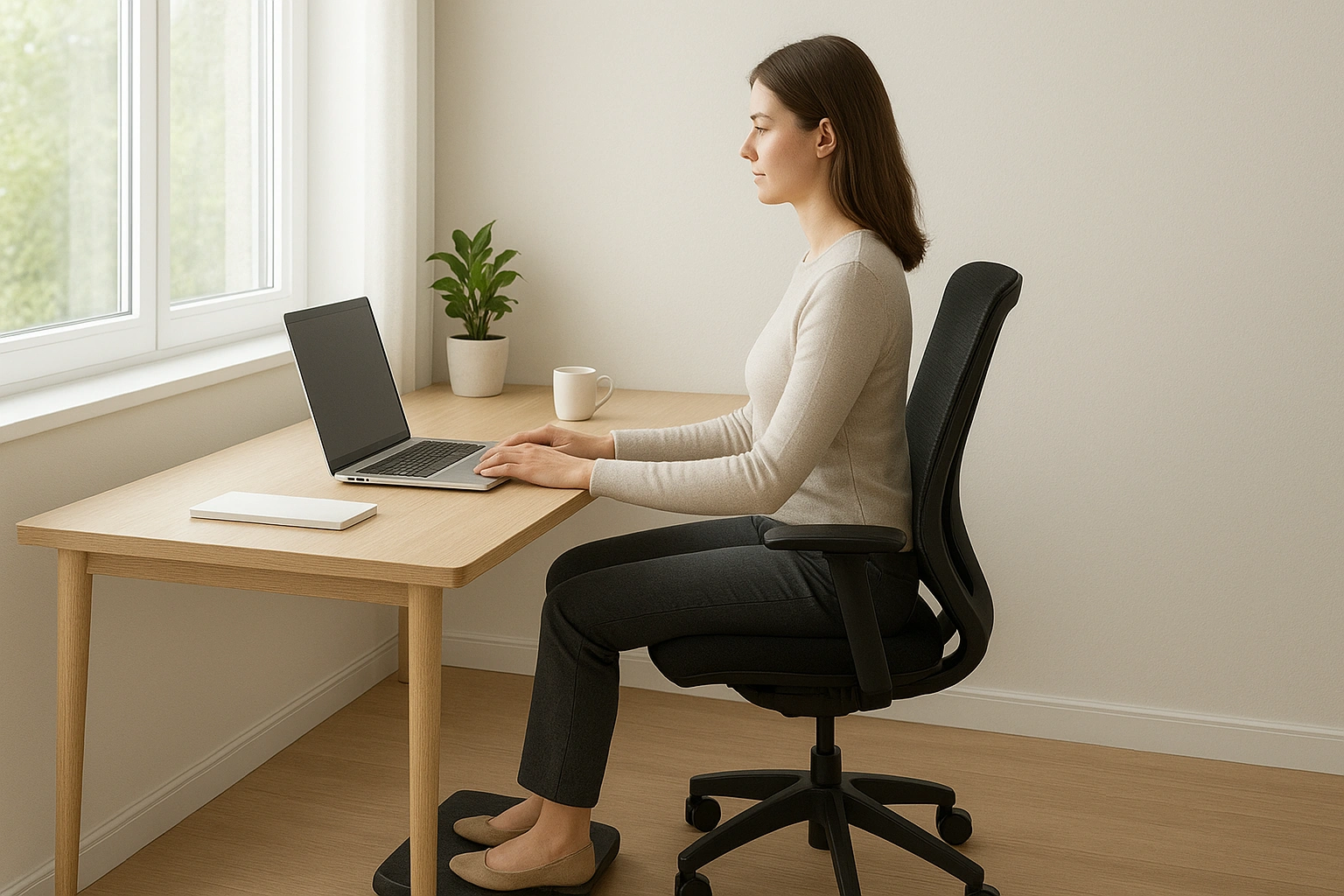
Why Desk Foot Support Matters: Benefits for Posture & Health
Integrating **desk foot support** into your home office setup offers profound benefits that extend to your entire body, significantly improving comfort and long-term health.
Improve Lower Back & Hip Alignment
When your feet dangle or aren’t properly supported, you tend to compensate by slouching, leaning forward, or crossing your legs. This puts unnecessary strain on your lower back and hips. A proper **footrest ergonomic setup** ensures your feet are firmly planted, allowing your knees to be at a comfortable 90-degree angle. This foundational support helps maintain the natural curve of your lower spine, reducing pressure on your lumbar region and promoting a healthier, more neutral spinal alignment.
Enhance Circulation & Reduce Fatigue
Sitting for prolonged periods can impede blood flow in your legs, leading to swelling, numbness, and fatigue. An office footrest elevates your feet slightly, which can improve circulation in your lower limbs. Many footrests also feature rocking mechanisms or textured surfaces that encourage subtle foot movements, further stimulating blood flow. This improved circulation helps reduce discomfort, keeps you more energized, and prevents the restless leg syndrome often associated with long sitting sessions.
Create a Comfortable Sitting Setup
Ultimately, a footrest completes the ergonomic chain, creating a truly comfortable sitting setup. When your feet are supported, your body feels more stable and balanced. This reduces unconscious fidgeting and allows you to relax into your chair, maintaining good posture effortlessly. The added comfort translates into better focus, reduced physical distractions, and a more enjoyable, productive workday. It’s a small adjustment with a significant impact on your overall well-being. For more comprehensive ergonomic tips, check out our guide on ergonomic home office ideas.
How It Works: Core Features of an Office Footrest
Modern **office footrest** designs offer a variety of features to ensure optimal desk foot support and contribute to a truly comfortable sitting setup. Here’s what to look for.
- Adjustability:
- Height Adjustment: Allows you to raise or lower the footrest to achieve the perfect knee and hip angle. Crucial for individuals of varying heights.
- Tilt/Angle Adjustment: Enables you to change the angle of the footrest platform, providing dynamic support and encouraging subtle movement.
- Surface & Material:
- Non-Slip Surface: A textured or rubberized surface prevents your feet from sliding off, ensuring stability.
- Massage/Texture: Some footrests feature bumps or rollers that can provide a gentle foot massage, stimulating circulation.
- Durable Material: Look for sturdy plastic, wood, or metal construction that can withstand daily use.
- Stability & Size:
- Wide Base: A broad, stable base prevents the footrest from tipping or sliding.
- Adequate Size: Ensure the platform is large enough to comfortably support both your feet without feeling cramped.
- Weight Capacity: While less critical than desks, ensure it can support your leg weight.
- Movement & Rocking Features:
- Free-Floating/Rocking: Some footrests allow for gentle rocking motions, encouraging subtle leg and foot movement to improve circulation and reduce stiffness.
Here’s a simplified process flow illustrating how to integrate a footrest into your **footrest ergonomic setup**:
Chart: Footrest Ergonomic Setup Workflow
| Step | Action | Goal | Benefit for Comfort |
|---|---|---|---|
| 1 | Adjust Chair Height Set chair so elbows are at 90-100 degrees to desk. |
Optimal upper body posture. | Foundation for lower body ergonomics. |
| 2 | Assess Foot Placement Check if feet are flat on floor with knees at 90 degrees. |
Identify need for footrest. | Determines if desk foot support is necessary. |
| 3 | Position Footrest Place footrest under desk. |
Ready for adjustment. | Initial placement for comfortable sitting setup. |
| 4 | Adjust Footrest Height & Tilt Fine-tune until feet are flat, knees at 90 degrees. |
Optimal lower body alignment. | Reduces lower back pressure, improves circulation. |
| 5 | Integrate Movement Periodically shift feet, use rocking feature (if applicable). |
Promote circulation, prevent stiffness. | Sustained comfort, reduced fatigue. |
| Total | Enhanced Ergonomic Comfort & Posture. |
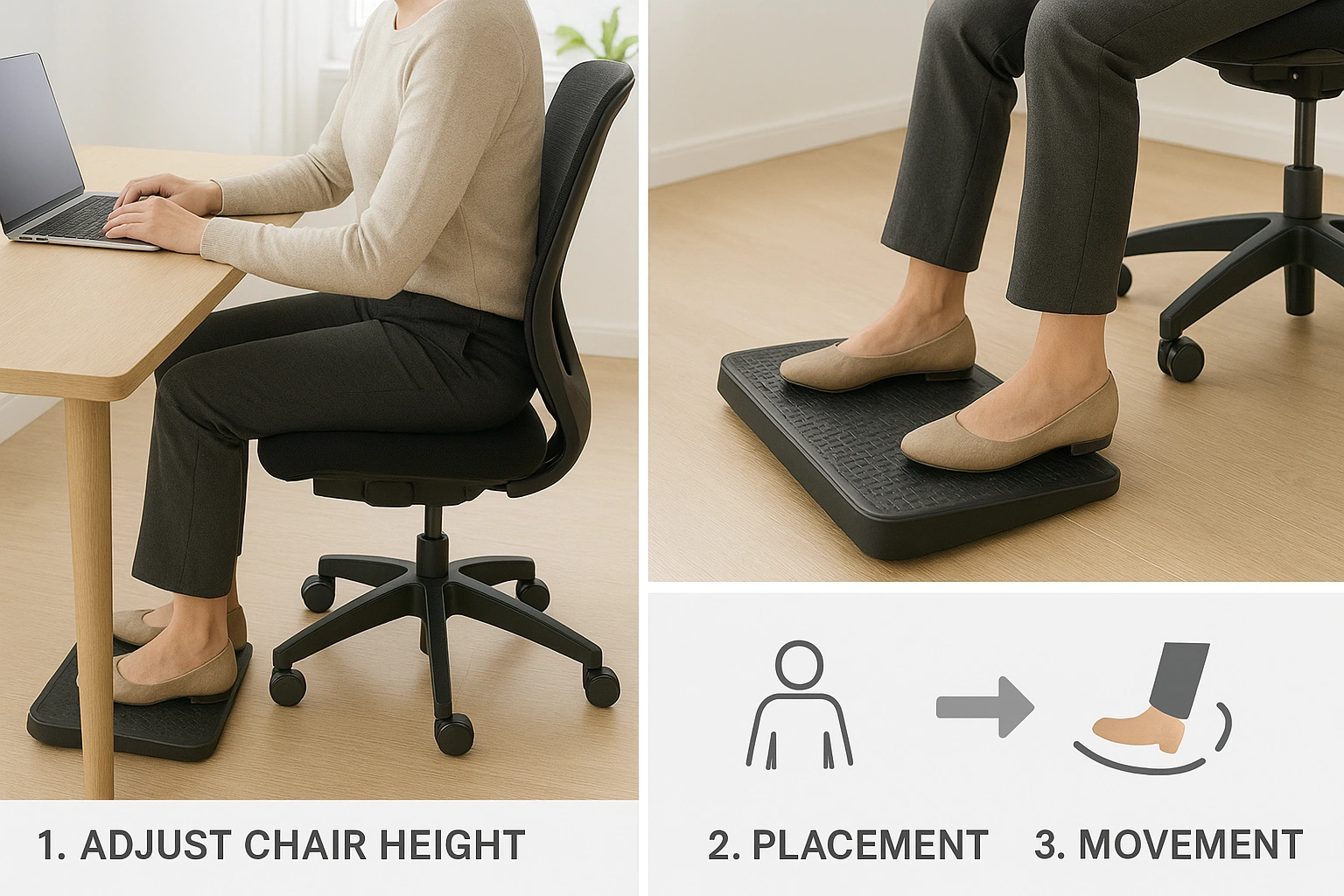
Real-Life Comfort Boost: A Case Study with Desk Foot Support
Let me share a common scenario that illustrates how integrating **desk foot support** can dramatically improve a remote professional’s comfort and posture.
The Challenge:
Chloe, a remote content writer, used a standard office desk that wasn’t height-adjustable. To maintain proper ergonomic posture for her upper body (elbows at 90 degrees to her keyboard), she had to raise her chair. This left her feet dangling uncomfortably, leading to restless legs, poor circulation, and a tendency to slouch, causing lower back pain.
The Transformation with a Footrest Ergonomic Setup:
- Selected an Adjustable Office Footrest ($45): Chloe researched and chose an affordable, adjustable office footrest with a non-slip surface and a rocking feature. This was her ideal footrest ergonomic setup solution.
- Optimal Height & Tilt: She placed the footrest under her desk and adjusted its height until her feet were flat and her knees formed a comfortable 90-degree angle, with her thighs parallel to the floor. She also tilted it slightly for a more natural feel.
- Integrated Movement: Throughout the day, she consciously used the rocking feature of her footrest, making small movements with her feet to keep circulation flowing.
- Holistic Ergonomics: With her feet now properly supported, she found it much easier to maintain the correct posture in her ergonomic chair, reinforcing the benefits of her monitor arm and keyboard setup.
Outcome: Within days, Chloe noticed a significant improvement. Her restless legs disappeared, her lower back pain diminished, and she felt much more stable and comfortable in her chair. The simple addition of proper desk foot support completed her ergonomic workstation, allowing her to focus on her writing with renewed energy and comfort. This case highlights the profound impact of a well-chosen **footrest ergonomic setup**.
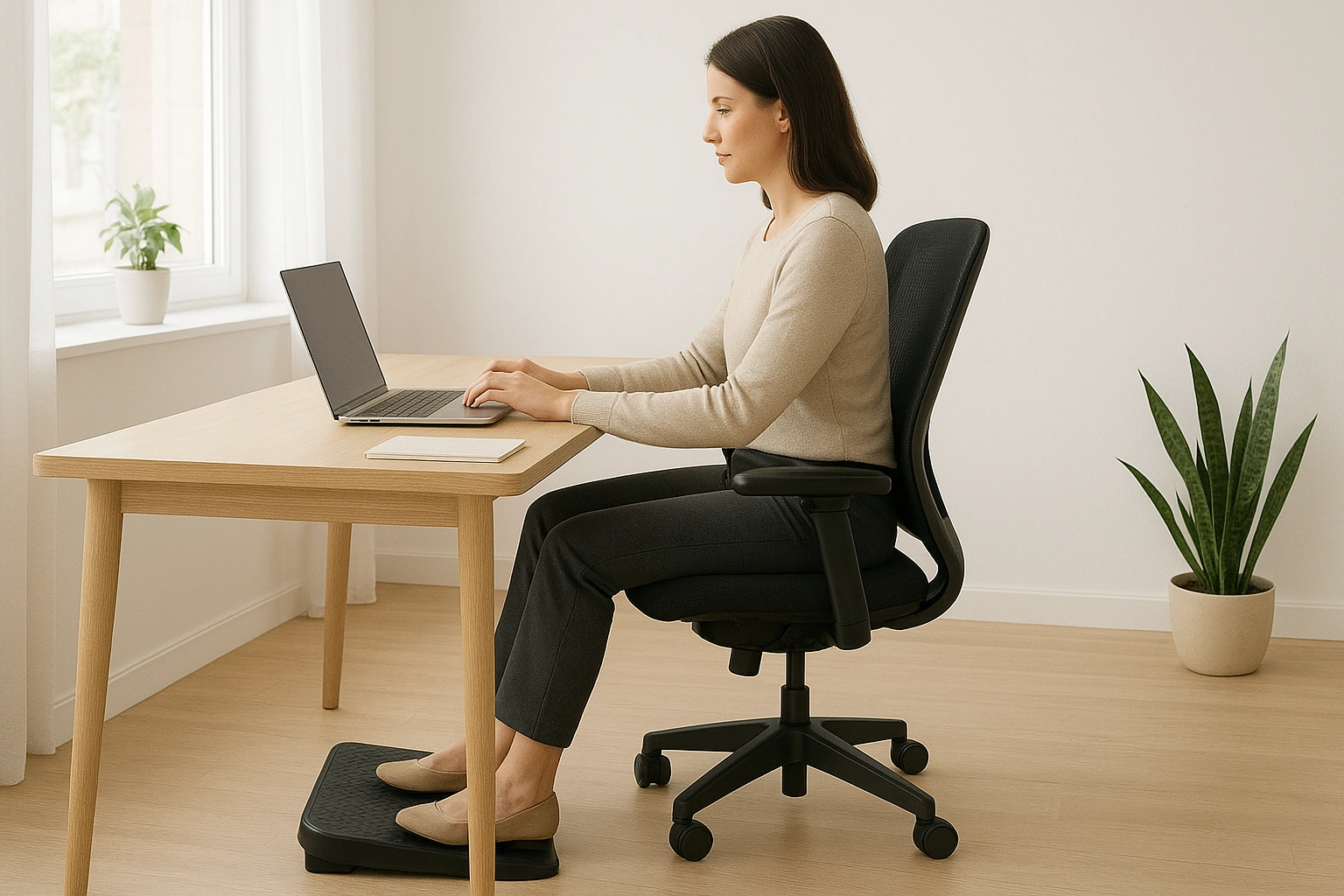
Pros and Cons of Using an Ergonomic Footrest:
| Pros | Cons |
|---|---|
| Improves Posture: Ensures proper knee/hip angle, supports lower back. | Can Be Overlooked: Often seen as optional, not essential. |
| Reduces Back Pain: Alleviates pressure on the lumbar spine. | Space Under Desk: Requires adequate legroom under the desk. |
| Boosts Circulation: Reduces swelling and fatigue in legs. | Stability Varies: Cheaper models might lack robust stability. |
| Enhances Comfort: Creates a stable, grounded feeling. | Learning Curve: May take time to find optimal height/tilt. |
| Affordable: Many effective options are budget-friendly. |
Comparing Top Office Footrests (2025)
Choosing the right **office footrest** is key to a truly comfortable sitting setup. Here’s a comparison of popular desk foot support options available in 2025.
| Type | Key Features | Pros | Cons | Best For |
|---|---|---|---|---|
| Adjustable Angled Footrest | Height & tilt adjustable, non-slip surface, often plastic/metal. | Highly customizable, good stability, improves circulation. | Can be bulky, some models may squeak. | Most users needing precise ergonomic adjustment. |
| Rocking Footrest | Curved base, allows for gentle rocking motion, often plastic. | Encourages movement, boosts circulation, simple design. | Less precise height adjustment, may not suit all users. | Users wanting to increase movement, reduce leg fatigue. |
| Memory Foam Footrest | Soft, contoured foam, often with a non-slip cover. | Extremely comfortable, good for sensitive feet, lightweight. | Less adjustable height/angle, can compress over time. | Users prioritizing soft comfort, sensitive feet. |
| Under-Desk Hammock | Fabric hammock attaches under desk, adjustable height. | Unique, relaxing, can be very comfortable for casual use. | Not ideal for active posture support, may feel too relaxed. | Users seeking relaxation, occasional foot elevation. |
| DIY Footrest (e.g., Books/Box) | Repurposed sturdy items. | Extremely cheap/free, customizable height, immediate solution. | No adjustability, can slip, less aesthetic. | Budget-conscious users, temporary setups. |
Common Mistakes to Avoid with Your Footrest Ergonomic Setup
While a **footrest ergonomic setup** is highly beneficial, common missteps can reduce its effectiveness. Avoid these pitfalls to ensure your desk foot support truly enhances your comfort.
- Using it Incorrectly (Feet Dangling/Too High): Mistake: Placing your feet on the footrest in a way that still leaves your knees too low or too high, or your ankles strained. Correction: Ensure your feet are flat and fully supported, with your knees forming a 90-degree angle (or slightly open) and your thighs parallel to the floor. Adjust the footrest height and tilt until this posture is achieved.
- Ignoring Chair & Desk Height: Mistake: Believing a footrest is a standalone solution without optimizing your chair and desk height first. Correction: The footrest is part of a holistic ergonomic setup. First, adjust your chair so your elbows are at a comfortable 90-100 degrees to your desk. *Then*, use the footrest to ensure proper lower body alignment if your feet don’t reach the floor.
- Choosing a Non-Adjustable Footrest: Mistake: Opting for a fixed-height footrest that doesn’t perfectly match your ergonomic needs. Correction: Invest in an adjustable office footrest. Height and tilt adjustability are crucial for customizing the support to your unique body and workstation.
- Using a Slippery Surface: Mistake: Using a footrest (especially a DIY one) with a smooth, slippery surface that causes your feet to slide off. Correction: Ensure your desk foot support has a non-slip surface. If using a DIY solution, add rubber pads or a textured mat to prevent movement.
- Forgetting to Move: Mistake: Remaining static on your footrest for hours, even with proper support. Correction: Even with a footrest, movement is key. Periodically shift your feet, use rocking features if available, or take short breaks to stand and walk around.
- Blocking Legroom: Mistake: Choosing an office footrest that is too large or bulky, restricting your leg movement under the desk. Correction: Select a footrest that fits comfortably under your desk without impeding your ability to move your legs or adjust your position slightly.
- Not Considering Circulation: Mistake: Using a footrest that puts pressure on the back of your calves or restricts blood flow. Correction: Ensure the footrest angle and height allow for unrestricted circulation. Some footrests have cutouts or designs specifically to avoid this.
Expert Tips & Best Practices for a Comfortable Sitting Setup
To truly maximize the benefits of your **footrest ergonomic setup** and ensure a consistently comfortable sitting setup, consider these expert strategies.
- The “90-90-90 Rule”: “Aim for 90-degree angles at your ankles, knees, and hips. A footrest helps achieve this when your chair can’t go low enough for your feet to be flat on the floor,” advises ergonomist, Dr. Sarah Lee.
- Combine with a Good Ergonomic Chair: While a footrest helps, it’s most effective when paired with a chair that offers adjustable seat height, lumbar support, and armrests. All elements work together for optimal posture.
- Utilize Rocking Motion: If your desk foot support has a rocking feature, use it! Gentle movement helps stimulate blood flow, reduces stiffness, and keeps you more alert than static sitting.
- Take Regular Micro-Breaks: Even with a perfect setup, prolonged sitting is detrimental. Stand up, stretch, and walk around for 5-10 minutes every hour. Use your footrest as a reminder to move.
- Ensure Adequate Under-Desk Space: Before purchasing an office footrest, measure the space under your desk to ensure it fits comfortably without bumping your knees or restricting leg movement.
- Consider a Standing Desk (for alternation): For ultimate flexibility, pair your ergonomic sitting setup (with footrest) with a standing desk. This allows you to alternate between sitting, standing, and moving throughout the day.
- Keep Your Feet Bare or in Socks: For maximum comfort and to fully appreciate any textured/massage features, consider removing your shoes while using the footrest.
- Listen to Your Body: Pay attention to how your body feels. If you experience any discomfort, re-adjust your footrest, chair, and monitor. Your body provides the best feedback on your comfortable sitting setup.
- Clean Regularly: Dust and debris can accumulate on your footrest. A quick wipe-down periodically keeps it hygienic and pleasant to use.
- Don’t Forget Your Monitor: Ensure your monitor is at eye level. Even with perfect lower body posture, a poorly positioned monitor can lead to neck and upper back pain, negating some footrest benefits.
Frequently Asked Questions (FAQ) About Footrest Ergonomic Setup
Here are some common questions about optimizing your home office with an ergonomic footrest.
A: A footrest is crucial for an ergonomic setup because it ensures your feet are flat and supported, maintaining a proper 90-degree angle at your knees and hips. This improves circulation, reduces pressure on your lower back, and promotes overall good posture, especially if your chair is too high.
A: Individuals who are shorter, whose feet don’t comfortably reach the floor when their chair is at an ergonomic height, or those using a non-adjustable desk that’s too high, benefit most from desk foot support. It’s also great for improving circulation and reducing fatigue for anyone sitting for long periods.
A: Look for an office footrest that is adjustable in height and tilt, has a non-slip surface, and is sturdy. Some models offer rocking features or massage textures to further stimulate circulation and comfort during your comfortable sitting setup.
A: Yes, for a temporary or budget-friendly solution, you can use a stack of sturdy books, a small sturdy box, or even a ream of paper as a DIY footrest. Just ensure it’s stable, non-slip, and provides the correct height to support your feet comfortably.
A: Your feet should be flat on the footrest, with your knees forming a 90-degree angle (or slightly greater) and your hips also at a 90-degree angle. The footrest should allow you to maintain this posture comfortably without straining your ankles or knees.
A: Yes, by elevating your feet slightly and allowing for proper leg positioning, an ergonomic footrest can significantly improve circulation in your lower limbs. This helps reduce swelling, fatigue, and the risk of blood clots associated with prolonged sitting.
Conclusion
A well-planned footrest ergonomic setup is a simple yet powerful addition to your home office that can transform your comfort, posture, and overall well-being. Incorporating a footrest ergonomic setup ensures your feet are properly supported, which enhances your seated posture and reduces strain on your lower back. Using a footrest ergonomic setup as part of your daily routine also improves circulation and prevents fatigue. Overall, a thoughtful footrest ergonomic setup creates a comfortable sitting setup that keeps you focused and energized throughout the workday.
Don’t underestimate the power of an office footrest. It’s an affordable and effective way to complete your ergonomic workstation and transform your daily comfort. Elevate your feet, elevate your workday!
Ready to explore more ways to enhance your ergonomic home office? Discover additional resources on workspace optimization and health at https://aigeneratif.biz.id/. For comprehensive insights into office ergonomics and best practices, consider reading expert advice from sources like OSHA’s ergonomics guidelines. Support your feet, support your success!