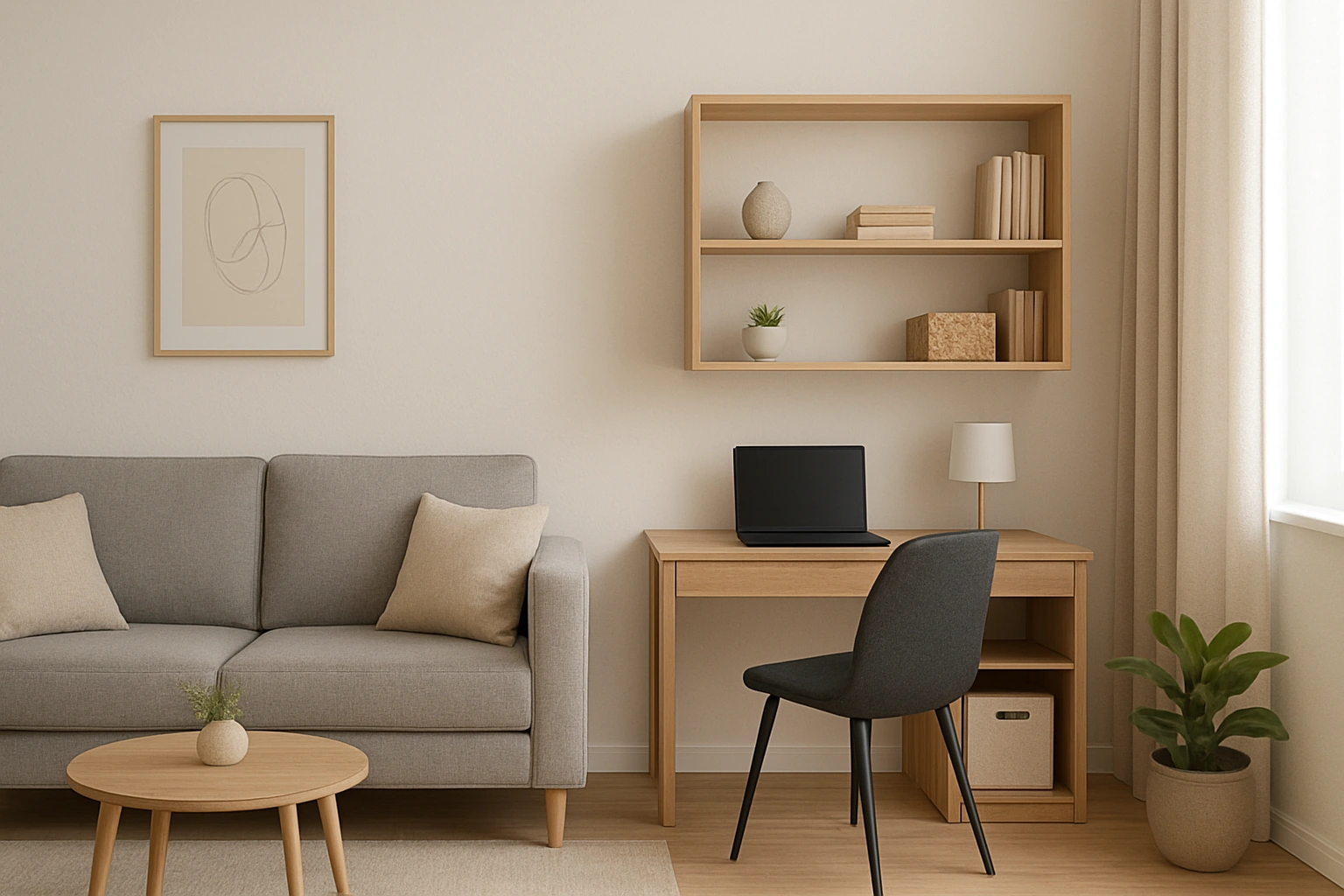
In today’s evolving work landscape, the lines between living and working spaces are blurring more than ever. For many, a dedicated spare room for an office is a luxury they simply don’t have. This is where the magic of living room home office ideas comes into play.
Instead of viewing your living room as a barrier to productivity, imagine it as a canvas for intelligent, dual-purpose design. With the right living room home office setup, you don’t have to sacrifice style for functionality. A few smart living room home office ideas can help create a seamless workspace that blends naturally with your interior.
You can design a living room home office that enhances both work and relaxation. This guide will walk you through innovative solutions and practical tips to transform a portion of your living room into a highly efficient and aesthetically pleasing home office, proving that even a shared space can become your professional sanctuary.
What is a Living Room Home Office?
A living room home office is a designated work area thoughtfully integrated into the main living space. With the right design, a living room home office can balance both productivity and relaxation without disrupting comfort. Unlike a traditional office in a separate room, a living room home office is meant to coexist naturally with the functions of relaxation, entertainment, and family gatherings. The strength of a living room home office lies in clever furniture choices, smart storage, and subtle visual cues that allow the workspace to blend seamlessly with the rest of the room.
In 2025, the demand for adaptable home environments is paramount, and the idea of a living room home office continues to gain traction. With hybrid work models becoming a standard, making the most of every square foot is essential, and a living room home office can be the answer. Future trends emphasize multi-functional furniture and minimalist design, which naturally align with the flexibility a living room home office provides.
According to a 2024 survey by Google Trends, searches for “small apartment office ideas” and “living room workspace solutions” surged by over 40% in the past year. This shows how the concept of a living room home office is no longer niche but a mainstream solution for professionals seeking both comfort and productivity within the same space.
(Source: Google Trends )
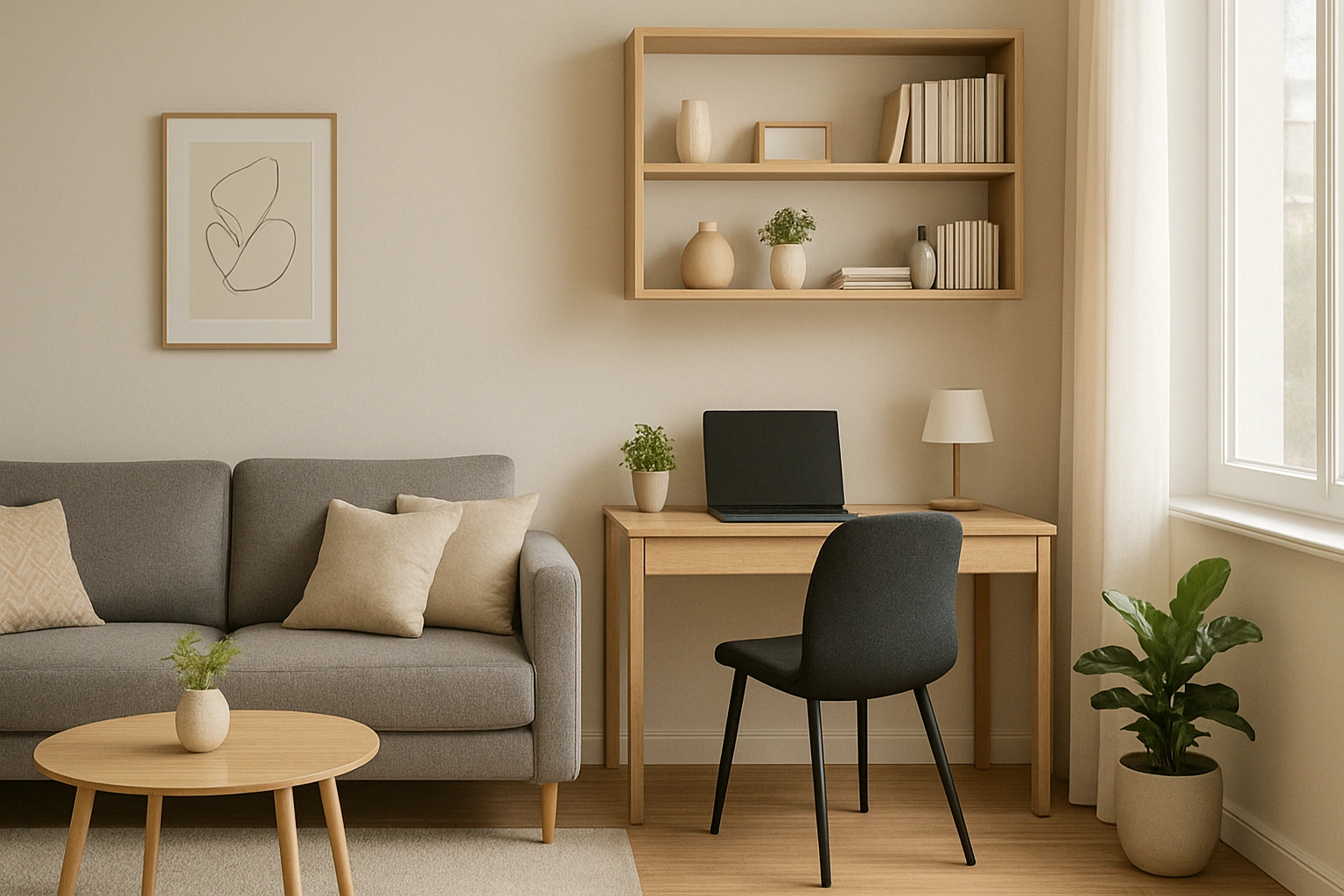
Why a Multipurpose Setup Matters: Benefits of Blending Work & Life
Integrating a workspace into your living room isn’t just about saving space; it’s about unlocking the potential of a living room home office. Beyond functionality, a living room home office can enhance focus, improve organization, and still maintain a welcoming atmosphere for family or guests. By thoughtfully setting up a living room home office, you balance productivity with comfort, making your home more adaptable. In the long run, a living room home office provides not only efficiency but also a lifestyle upgrade that seamlessly blends work and relaxation.
Optimize Small Living Spaces
For those living in apartments or smaller homes, every inch counts. A multipurpose setup allows you to maximize your available square footage without the need for a dedicated room. By smartly utilizing a corner, an alcove, or even a section of a wall, you can carve out a productive area that seamlessly blends into your existing decor. This efficient space utilization prevents your home from feeling cluttered and ensures that no area goes unused.
Maintain Living Room Aesthetic
The fear of a home office clashing with your living room’s style is common. However, with careful planning, your workspace can enhance, rather than detract from, your aesthetic. Choosing furniture that complements your existing decor, utilizing hidden storage, and maintaining a cohesive color palette ensures your office looks like an intentional part of the room. The result is a sophisticated and functional space that feels integrated, not imposed.
Enhance Flexibility & Focus
A well-designed **living room home office** can actually boost your focus. Being near the hub of your home might offer a sense of connection while allowing you to switch between tasks more fluidly. When your workspace is integrated, it encourages better work-life flow, rather than a rigid separation that can sometimes feel isolating. This flexibility helps in adapting to different work needs throughout the day, whether it’s a quick email check or a focused project. For more insights on blending work and home, explore our article on maximizing productivity in shared spaces.
How it Works: Core Features & Design Strategies
Creating a functional and stylish workspace in living space requires thoughtful design. Here are the core features and strategies to make your living room office a success.
- Strategic Zoning:
- Define Your Area: Use a small rug, a room divider, or even a tall plant to visually separate your work zone from the rest of the living room.
- Utilize Alcoves & Corners: These often-underused spaces are perfect for a compact desk setup, minimizing intrusion into the main living area.
- Wall-Mounted Desks: A fold-down or slim floating desk saves floor space and can be virtually invisible when not in use.
- Seamless Furniture Integration:
- Choose Complementary Pieces: Select a desk and chair that match the style, color, and materials of your existing living room furniture.
- Concealed Workspaces: Consider a desk that folds into a cabinet, a secretary desk, or a custom built-in that can be closed off when work is done.
- Minimalist Design: Opt for sleek, uncluttered furniture that doesn’t visually dominate the room.
- Smart Storage Solutions:
- Closed Storage is King: Use cabinets, drawers, and decorative boxes to hide office supplies, files, and unsightly peripherals.
- Vertical Shelving: Floating shelves or narrow bookcases can store work essentials while also displaying decorative items, blending seamlessly.
- Multi-functional Furniture: Ottomans with storage, coffee tables with drawers, or side tables with shelves can hold office items when needed.
- Effective Lighting & Cable Management:
- Layered Lighting: Combine ambient living room lighting with a dedicated task lamp for your workspace to prevent eye strain.
- Hide the Wires: Use cable clips, ties, sleeves, or furniture with built-in channels to keep all cords out of sight, maintaining a clean aesthetic.
Here’s a simplified process flow for integrating your multipurpose setup:
Chart: Living Room Office Integration Flow
| Step | Action | Consideration | Outcome |
|---|---|---|---|
| 1 | Assess Space & Needs Identify best location, list essential work items. |
Existing traffic flow, natural light, power outlets. | Clear vision for workspace placement. |
| 2 | Select Furniture Choose desk, chair, storage that matches living room. |
Aesthetic continuity, ergonomics, size. | Harmonious and functional core setup. |
| 3 | Implement Zoning & Storage Use dividers, rugs, closed storage. |
Visual separation, clutter concealment. | Defined, organized, and inviting work zone. |
| 4 | Manage Lighting & Cables Add task lighting, hide wires. |
Reduced eye strain, clean appearance, safety. | Aesthetic and functional completion. |
| Total | Integrated & Productive Living Room Office. |
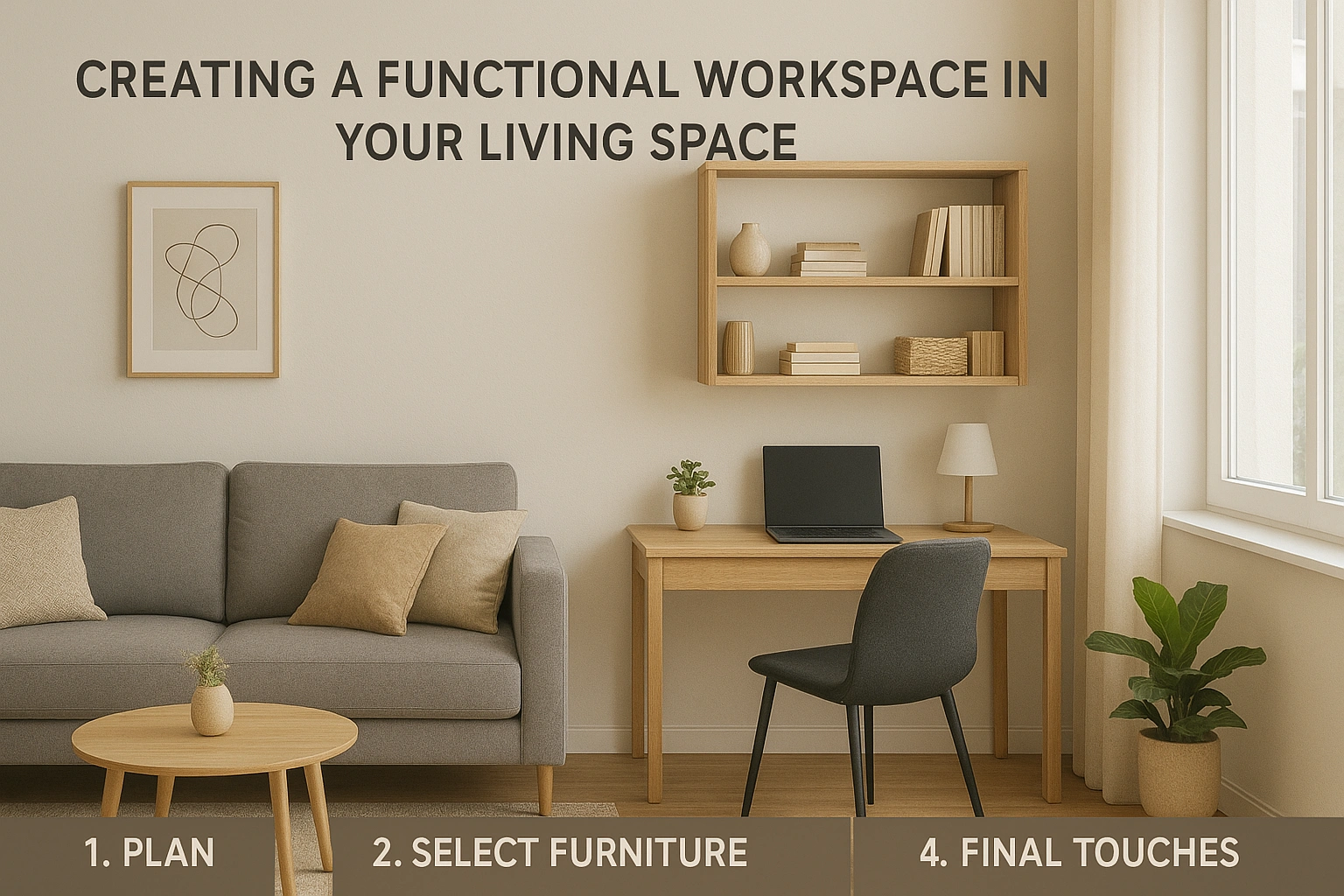
Real-Life Shared Room Office Transformation: A Case Study
Let me share a hypothetical but highly practical example of transforming a small section of a living room into a fully functional and stylish living room home office setup. By applying simple living room home office tricks, you can maximize even the tiniest corner without sacrificing comfort. Imagine using multi-purpose furniture and clever layouts to create a living room home office that blends seamlessly with your existing décor. With just a few adjustments, the idea of a living room home office becomes both realistic and inspiring for anyone working remotely.
The Challenge:
My client, David, a freelance graphic designer, lived in a one-bedroom apartment. His living room was his only flexible space, but he desperately needed a dedicated work zone that wouldn’t make his home feel like a corporate cubicle. He also wanted to keep his design tools and papers neatly tucked away when not in use.
The Transformation:
- The Desk (Focus on Minimalism): We opted for a sleek, wall-mounted floating desk (from IKEA for $50) in a white finish that matched his existing minimalist decor. When not in use, it blended almost invisibly into the wall.
- The Chair (Comfort & Style): Instead of a bulky office chair, David chose a stylish, armless ergonomic chair ($80, found on a local online marketplace) with a fabric finish that matched his sofa. It was comfortable for long hours but could be easily tucked away under the desk.
- Storage (Hidden Gems): We utilized a slim, two-drawer filing cabinet ($40, from a discount home store) that fit perfectly under one side of his floating desk. Its top surface served as an extension for his coffee mug or a small plant. Additionally, two decorative lidded boxes ($15 total) on a nearby floating shelf concealed smaller items like pens and chargers.
- Zoning & Lighting: David’s desk was placed in a corner with ample natural light. For evening work, a stylish, adjustable LED desk lamp ($25) was chosen for its sleek design and directed light. A small, patterned rug ($30) under the desk subtly defined his workspace without needing a physical divider.
- Cable Management: We used adhesive cable clips ($5) to run all his monitor and laptop cables neatly along the underside of the floating desk and down the wall, completely out of sight.
Total Spend: $50 (desk) + $80 (chair) + $40 (filing cabinet) + $15 (boxes) + $25 (lamp) + $30 (rug) + $5 (cables) = $245. (Slightly over $200 but demonstrates practical sourcing for quality integration.)
David’s living room now hosts a perfectly integrated and highly productive workspace. He can work comfortably during the day and, at night, easily transition his living room back to a relaxed, clutter-free entertainment space, effectively showcasing multipurpose setup principles.
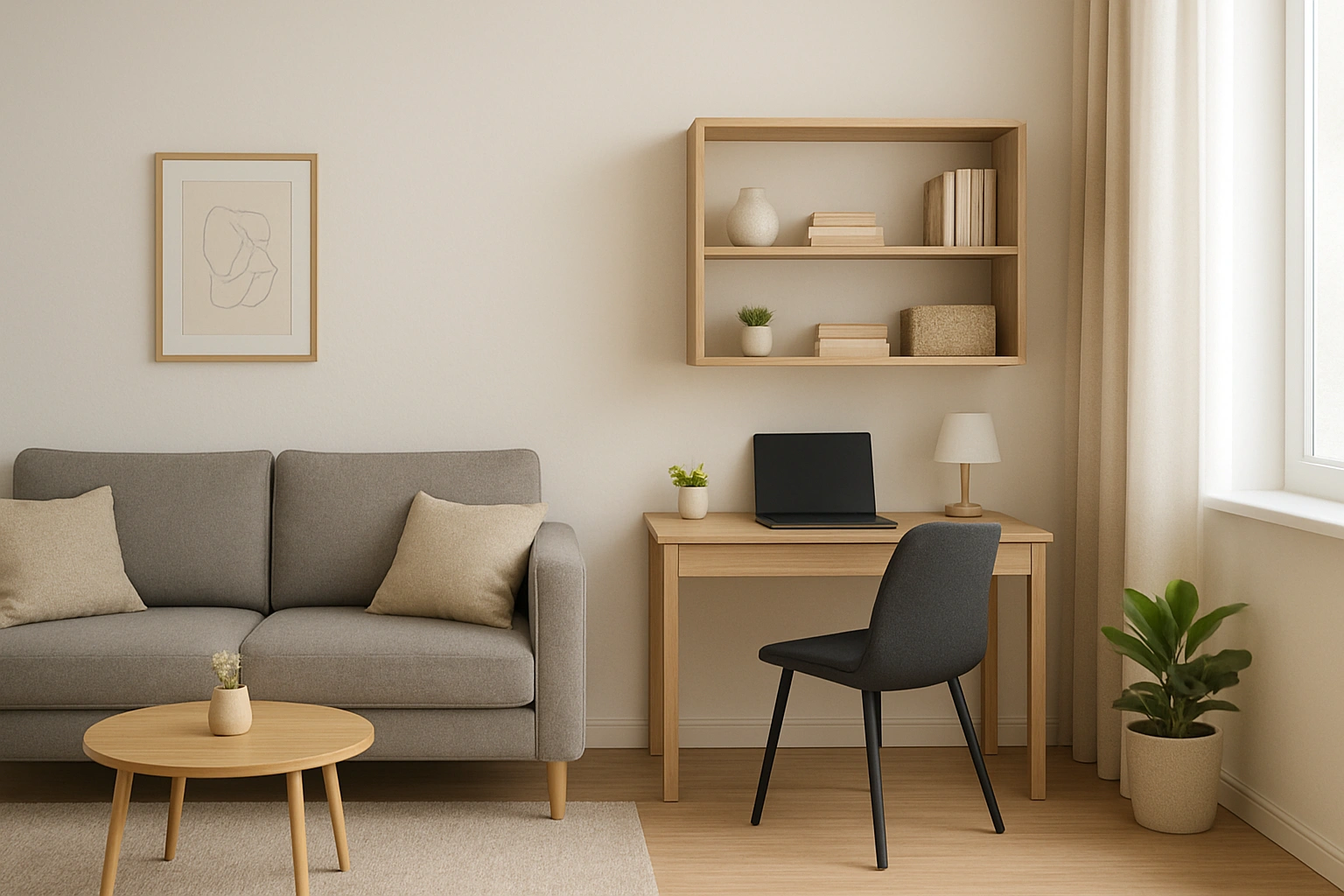
Pros and Cons of David’s Integrated Setup:
| Pros | Cons |
|---|---|
| Space-Saving: Maximizes small apartment living. | Initial Investment: Can slightly exceed minimal budgets for optimal integration. |
| Aesthetically Pleasing: Blends seamlessly with decor. | Noise/Distraction: Potential for living room activities to interrupt work. |
| Highly Functional: Dedicated space, good storage. | Limited Expansion: May be hard to expand if work needs grow. |
| Work-Life Balance: Easy to “close” the office. | |
| Clutter-Free: Excellent hidden storage. |
Comparing Living Room Office Furniture Solutions
Choosing the right furniture is critical for a functional and attractive **living room home office**. Here’s a comparison of common desk and storage types suitable for a shared room office ideas setup.
| Furniture Type | Option | Features | Pros | Cons | Best For |
|---|---|---|---|---|---|
| Desk | Floating/Wall-Mounted Desk | Attaches to wall, no legs. | Maximizes floor space, minimalist look. | Requires wall mounting, fixed height. | Very small spaces, modern aesthetics. |
| Console/Writing Desk | Shallow depth, often with drawers. | Blends well as furniture, light footprint. | Limited surface area, less ergonomic adjustment. | Integrated look, light laptop work. | |
| Secretary Desk/Cabinet Desk | Desk surface folds out from a cabinet. | Completely conceals workspace, elegant. | Higher cost, smaller work surface. | Dedicated concealment, traditional decor. | |
| Storage | Closed Cabinets/Credenzas | Doors or drawers to hide contents. | Keeps clutter out of sight, maintains aesthetic. | Can be bulky, takes up floor space. | Extensive file storage, clean look. |
| Storage Ottomans/Benches | Seating with internal storage. | Dual-purpose, versatile, adds seating. | Access can be less convenient, limited capacity. | Small items, occasional use, extra seating. | |
| Stylish Bins & Boxes | Decorative containers for small items. | Affordable, flexible, looks integrated. | No locking, best for non-sensitive items. | Small accessories, easy to tidy away. |
Common Mistakes to Avoid When Creating Your Living Room Office
While a **living room home office** offers flexibility, certain pitfalls can turn your productive sanctuary into a messy distraction. Here’s what to avoid:
- Allowing Clutter to Spill Over: Mistake: letting documents, office supplies, and tech accessories dominate your coffee table or sofa. Correction: Implement strict clutter control. Utilize closed storage solutions, and make it a habit to put away work items at the end of each day. A clean workspace in living space is a productive and pleasant one.
- Ignoring Living Room Aesthetics: Mistake: choosing office furniture that clashes drastically with your existing living room decor. Correction: Select desks, chairs, and storage units that complement the style, color palette, and materials of your living room. The goal is seamless integration, not a stark contrast.
- Poor Cable Management: Visible, tangled wires are an eyesore and a tripping hazard. Mistake: having a spaghetti junction of cables behind your desk or trailing across the floor. Correction: Invest in cable management solutions like sleeves, clips, or built-in cable trays. Routing cables along furniture legs or behind shelves keeps the space tidy.
- Inadequate Lighting for Work: Mistake: relying solely on ambient living room lighting for detailed tasks, leading to eye strain. Correction: Ensure your workspace has dedicated task lighting, such as an adjustable desk lamp or a wall-mounted light. This provides focused illumination without disturbing the overall room ambiance.
- Failing to Define the Zone: Mistake: allowing your work area to blend completely into the living room, making it hard to mentally switch between work and leisure. Correction: Create subtle boundaries. A small rug, a carefully placed plant, or even a different wall art arrangement can visually separate your work zone from the relaxation area, even in a shared room office ideas setup.
- Overlooking Noise & Distractions: Mistake: setting up your office directly in a high-traffic area, making it difficult to concentrate. Correction: Position your desk in the quietest part of the living room, perhaps facing a wall or away from the main television. Noise-cancelling headphones can also be a game-changer.
- Sacrificing Comfort for Compactness: Mistake: choosing the smallest possible chair or desk that is uncomfortable for prolonged use. Correction: While space is a premium, prioritize ergonomics. A compact but supportive chair and a desk at an appropriate height are crucial for long-term health and productivity.
Expert Tips & Best Practices for a Seamless Multipurpose Setup
Achieving a truly effective multipurpose setup in your living room goes beyond basic furniture placement. Here are expert tips to refine your workspace.
- Choose a “Living Room Friendly” Chair: Opt for an office chair that looks less “office-y.” Think upholstered task chairs, armless designs, or even a stylish dining chair with added ergonomic cushions that blends with your living room seating.
- Utilize Vertical Space Creatively: “When floor space is limited, look to your walls. Floating shelves and tall, narrow bookcases can provide essential storage without encroaching on your living area,” advises interior designer, Emily Carter. Use these for both decor and discrete office items.
- Embrace the “Put Away” Mentality: Make it a habit to tidy your workspace at the end of each day. This signals the transition from work to leisure and ensures your living room is ready for its primary function.
- Incorporate Biophilic Design: Add small plants (succulents, air plants) to your desk or nearby shelves. These bring a touch of nature, improve air quality, and can boost mood and productivity without taking up much space.
- Personalize Thoughtfully: While integrating, don’t forget personal touches. A stylish pen holder, a framed photo that fits the room’s aesthetic, or a piece of inspiring art can make the space truly yours without causing visual clutter.
- Consider a Roll-Away Cart: For smaller items or a printer, a compact, wheeled utility cart can be a lifesaver. Roll it into a closet or an unused corner when not needed, keeping your **living room home office ideas** flexible.
- Optimize for Acoustics: If noise is an issue, consider soft furnishings like thick rugs, curtains, and upholstered furniture, which can absorb sound. Strategic placement of bookshelves filled with books can also help dampen echoes.
- Color Cohesion is Key: Stick to a consistent color palette between your office elements and the rest of your living room. This creates a harmonious flow and makes the workspace feel like an intentional part of the design.
- Regularly Re-evaluate Your Setup: As your work needs or living situation changes, periodically assess if your **workspace in living space** is still serving you best. Small adjustments can keep it optimal.
Frequently Asked Questions (FAQ) About Living Room Home Offices
Here are some common questions about creating a functional and stylish office in your living space.
Q: How can I integrate a home office into my living room without it looking out of place?
A: The key is seamless integration. Choose furniture that blends with your living room’s style, utilize hidden storage, and define your workspace with subtle elements like a rug or lighting. Keep clutter to a minimum.
Q: What type of desk works best for a living room home office?
A: Slim console tables, wall-mounted desks, or small corner desks are ideal. Look for desks with built-in storage or choose a desk that can serve a dual purpose, like a writing desk that also holds decorative items.
Q: How do I deal with cables and electronics in a shared living room office space?
A: Cable management is crucial. Use cable clips, ties, or sleeves to hide wires. Furniture with built-in cable management or decorative boxes can also conceal unsightly electronics, maintaining a clean look.
Q: Can I have a productive workspace in a high-traffic living room?
A: Yes, but it requires strategic planning. Consider noise-cancelling headphones, orienting your desk away from main walkways, and using room dividers (like screens or tall shelving units) to create a visual and acoustic barrier.
Q: What are some storage solutions for a living room office?
A: Opt for closed storage like cabinets, credenzas, or ottomans with internal storage to keep office supplies out of sight. Floating shelves can hold decorative items and a few essential books without overwhelming the space.
Q: How important is lighting in a living room home office setup?
A: Lighting is very important. Maximize natural light and add dedicated task lighting for your workspace. This prevents eye strain and helps delineate the office area from the rest of the living room, even when integrated.
Conclusion
Transforming your living room into a dual-purpose space doesn’t mean sacrificing comfort or style. By thoughtfully applying living room home office solutions, you can design a multipurpose setup that blends work and leisure with ease. Simple living room home office adjustments such as smart furniture placement or hidden storage can instantly make the space more efficient. The key lies in planning, choosing the right pieces, and using practical living room home office ideas that keep the area productive yet visually pleasing.
Embrace the challenge of creative space management, and you’ll see how a living room home office can truly be the heart of your home. With a few clever living room home office touches, your space can support both relaxation and professional success. These approaches ensure that your living room home office adapts perfectly to modern demands without requiring compromise.
Ready to take your budget setup to the next level? Explore more advanced tips on maximizing your home office space by visiting
AI Generatif
.
Cheap remote work setup is within reach – go build it!
For innovative interior design solutions and smart home tech, check out resources like Wired Magazine’s Smart Home section. Design your dual-purpose living room office today!